

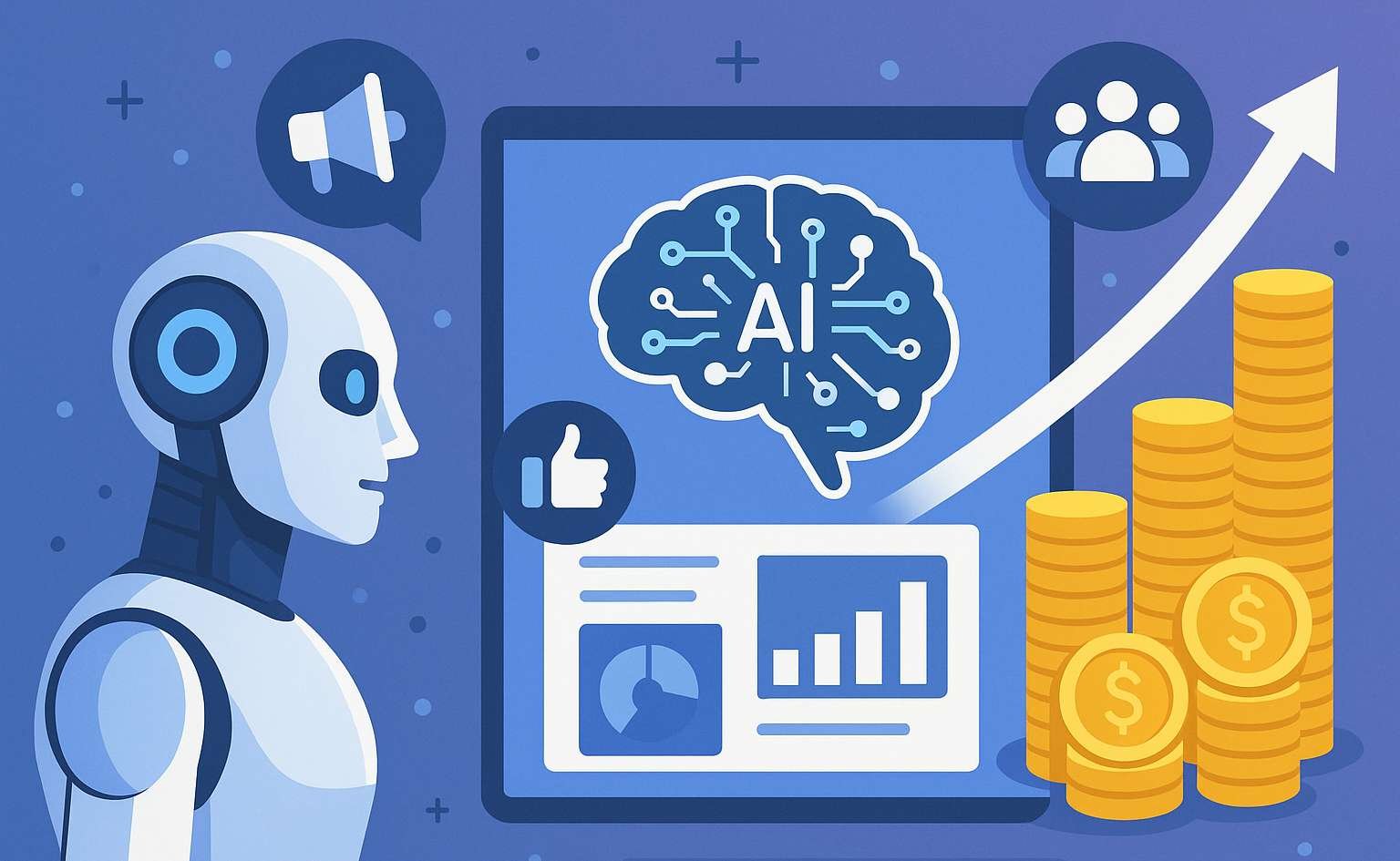
Here’s what nobody’s saying out loud: If you’re still doing marketing the old way—manually analyzing spreadsheets, guessing at customer preferences, spending hours on campaign optimization—you’re not just behind. You’re getting absolutely destroyed by competitors who figured out AI six months ago.
The AI marketing revolution isn’t coming. It already happened. The market hit $47.32 billion in 2025 and is projected to explode past $107 billion by 2028. And 88% of marketers are already using AI tools daily. So if you’re waiting for the “right time” to jump in, congrats—you already missed it.
But here’s the good news: It’s not too late. You just need to understand what’s actually happening, cut through the hype, and implement what matters. Let’s get into it.
The Current State: AI Ate Marketing (And It’s Hungry for More)
Let me hit you with some numbers that should make you pay attention:
78% of organizations are now deploying AI in one or more business functions. This isn’t experimental anymore—it’s operational. Companies aren’t “trying” AI; they’re running their entire marketing operations on it.
And the results? 93% of marketers report that AI helps them create content faster, and 81% say it boosts both brand awareness and sales. These aren’t marginal improvements. This is game-changing stuff.
But here’s what really blows my mind: Less than half of marketers are using AI in their regular work, despite all the hype and coverage. There’s a massive gap between awareness and adoption. Which means if you start now, you’re still ahead of at least half your competition.
The Trends That Actually Matter (Not the Clickbait BS)
1. Machine Learning Is Running Your Campaigns Now
Remember when you had to manually adjust ad bids, test audiences, and optimize campaigns? Yeah, that’s over.
In 2025, marketers are living out a new age of “autonomous media buying,” where algorithms not only carry out ad placement but also adjust bidding and funding strategy in real time based on performance—without any human input.
Google Ads, Meta Ads, TikTok Ads—they’re all using machine learning to automatically optimize everything. The algorithm knows better than you do which creative to show, when to show it, and how much to bid. Embrace it or get left behind.
Real-world example: DoorDash leveraged technology to reduce marketing costs by 10-30% while reaching the same number of clients. That’s not a typo. Same reach, 30% less cost. That’s the power of ML optimization.
2. Hyper-Personalization at Scale (Finally Real)
Generic marketing is dead. Customers expect content tailored specifically to them, and AI-powered tools make it easier than ever to personalize content by gathering behavioral and contextual data.
We’re talking about personalization based on:
- Browsing behavior
- Device type
- Geolocation
- Time of day
- Past purchases
- Predicted future needs
Netflix uses machine learning algorithms to analyze user data like watch history and ratings to create personalized recommendations for each user, increasing engagement and retention. Amazon uses predictive analytics to create targeted product recommendations based on browsing and purchase history.
The insight you’re missing: Personalization isn’t just “nice to have” anymore. 91% of consumers prefer brands that personalize. If you’re not personalizing, you’re actively losing to competitors who are.
3. Predictive Analytics: From “What Happened?” to “What Will Happen?”
This is where it gets really powerful. AI isn’t just analyzing past data—it’s predicting future behavior.
Machine learning can now:
- Predict which leads will convert (and which are time-wasters)
- Forecast customer lifetime value before the first purchase
- Identify churn risk before customers even think about leaving
- Anticipate what products customers will want next
Machine learning allows teams to apply lead scoring models to automatically identify the most potential leads and prioritize their time and attention, boosting team productivity while decreasing costs.
Case study insight: Remember when marketers spent hours manually scoring leads? ML does this automatically now, processing way more data points than any human could consider. The result? Sales teams focus only on high-probability leads, conversion rates skyrocket, and everyone makes more money.
4. Content Creation at Superhuman Speed
The most common applications of AI are using it to support copywriting for email marketing, organic search, and social media. But it goes way deeper than that.
AI is now:
- Writing entire blog posts
- Creating social media content
- Generating ad copy variations
- Producing video scripts
- Designing graphics
- Even creating music for videos
And it’s doing all of this in minutes, not hours or days.
But here’s the catch: AI struggles to remain consistent over time, which can be a problem if you’re trying to stick to a particular brand voice. The technology can also output false information, making it essential to have a human review every piece of content before it goes live.
So AI isn’t replacing content creators—it’s empowering the good ones to produce 10x more output while maintaining quality. The bad ones who were just churning out generic content? Yeah, they’re done.
5. Customer Service Automation (That Doesn’t Suck)
In 2025, brands are automating customer service using chatbots and virtual assistants, allowing businesses to easily handle initial inquiries, answering questions that previously would have taken hours a day of a team member’s time.
But we’re not talking about those crappy chatbots from 2018 that couldn’t answer basic questions. Modern AI chatbots:
- Understand context and nuance
- Handle complex queries
- Learn from every interaction
- Seamlessly escalate to humans when needed
Real example from the field: I’ve seen e-commerce brands where AI bots answer 67% of support questions without escalations and also cross-sell complementary items by interpreting intent using natural language processing. That’s not just saving money—that’s generating revenue while solving problems.
6. AI-Driven Visual Search and Recognition
This one’s flying under the radar but is absolutely massive. Visual search powered by computer vision allows customers to:
- Take a photo of something and find it in your store
- Upload screenshots to find similar products
- Search using images instead of text
Visual search is one of the emerging trends directly impacting marketers’ campaigns in late 2025.
Think about it: How many times have you seen something cool and thought “I wish I could find that online”? AI visual search solves that. For e-commerce brands, this is a gold mine.
7. First-Party Data + AI = The New Competitive Advantage
With cookies dying and privacy regulations tightening, 2025 will see more transition to first-party data and AI enrichment with new tools to help businesses understand more about their customer behavior.
AI analyzes patterns like shopping habits, preferred communication channels, and engagement trends without using cookies by combining first-party data with other data sources such as demographic or geographic information.
This is huge. The brands that build strong first-party data strategies and use AI to extract insights will dominate. The ones still relying on third-party cookies? They’re toast.
The Skills You Actually Need Now
The game has changed. Here are the skills that matter in 2025:
1. Prompt Engineering Knowing how to talk to AI is now a core marketing skill. The better your prompts, the better your outputs. It’s that simple.
2. Data Interpretation AI gives you insights, but you need to understand what they mean and how to act on them. Data literacy isn’t optional anymore.
3. Strategic Thinking Since AI handles execution, your strategic brain becomes 10x more valuable. What should we create? For whom? Why? These questions matter more than ever.
4. AI Tool Selection and Integration There are hundreds of AI tools. Knowing which ones to use, when, and how to integrate them is a critical skill.
5. Quality Control and Brand Protection AI can create content fast, but it can also create garbage fast. Your job is ensuring quality and protecting your brand voice.
The Challenges Nobody Mentions (Until You’re Already Screwed)
Let’s talk about the dark side, because it exists:
Challenge 1: The AI Slop Problem
AI Shovelware is now often used to refer to poor quality software and content created by AI. The internet is getting flooded with low-quality AI-generated content. If you’re contributing to this, you’re hurting your brand, not helping it.
The solution: Use AI to enhance quality, not just increase quantity. Every piece of AI-generated content needs human oversight, editing, and refinement.
Challenge 2: Bias in Algorithms
AI was trained on years of data, including books, websites, and photos. As a result, the technology regularly exhibits social, racial, and gender biases in the information it outputs.
You need to actively monitor for bias and be prepared to intervene. This isn’t just an ethical issue—it’s a brand risk issue.
Challenge 3: The Adoption Gap
Organizations are investing in AI at record levels, but employee adoption lags. Closing this gap requires training, support, and a shift in mindset.
You can’t just buy AI tools and expect magic. You need to train your team, change workflows, and create a culture that embraces AI rather than fears it.
Challenge 4: Cost and ROI Uncertainty
Here’s an uncomfortable truth: Only 1% of businesses fully recover their generative AI investment.
Why? Because most companies are implementing AI randomly without strategy. They’re buying tools without clear use cases, without proper training, without measuring results.
The fix: Start with specific, measurable use cases. Track ROI religiously. Scale what works, kill what doesn’t.
Challenge 5: The Human Touch Paradox
As we move through 2025, it has never been more important to ensure that marketing doesn’t lose its human touch. There is a balance between automation and human creativity.
Overreliance on AI makes your marketing feel robotic and generic. The brands winning are using AI to handle the heavy lifting while doubling down on human creativity, strategy, and connection.
How Real Businesses Are Using This Right Now
Let me show you what this looks like in practice:
E-commerce Brand:
- AI analyzes customer behavior and predicts purchase intent
- Automatically segments customers into micro-audiences
- Generates personalized email sequences for each segment
- Optimizes send times for each individual customer
- Tests subject lines and creative automatically
- Result: 3x increase in email revenue, 50% less time managing campaigns
B2B SaaS Company:
- Uses AI to score leads based on 100+ data points
- Chatbot handles initial qualification and books demos
- AI analyzes sales calls and provides coaching feedback
- Predictive models identify accounts likely to churn
- Automated content personalization for each account
- Result: 40% increase in demo-to-close rate, 25% reduction in churn
Content Creator/Influencer:
- AI analyzes top-performing content and identifies patterns
- Generates content ideas based on trends and audience interests
- Creates first drafts of scripts and posts
- Suggests optimal posting times
- Repurposes long-form content into multiple formats
- Result: 5x content output, 2x engagement rates
What You Should Do Tomorrow (Actual Action Steps)
Stop planning and start doing. Here’s your roadmap:
Week 1: Audit and Learn
- Identify your biggest time-sucks in marketing
- Research AI tools that address those specific problems
- Pick 2-3 tools to test (start with free trials)
- Spend 1 hour per day learning and experimenting
Week 2: Implement One Use Case
- Choose your highest-impact use case (probably content creation or campaign optimization)
- Fully implement one AI tool for that use case
- Document your process and results
- Train your team on that specific tool
Week 3-4: Measure and Optimize
- Track time saved, quality maintained, and results achieved
- Compare AI-assisted work vs. traditional methods
- Identify what works and what doesn’t
- Refine your prompts and processes
Month 2: Scale What Works
- Add 2-3 more AI tools to your stack
- Create standard operating procedures for AI usage
- Establish quality control checkpoints
- Begin tracking ROI across all AI implementations
Month 3+: Advanced Integration
- Connect your AI tools to work together
- Build automated workflows
- Train advanced use cases
- Become the AI expert on your team/company
The Uncomfortable Truth About the Future
Here’s what’s really happening: AI integration into marketing has reached a critical tipping point. What was once considered “cutting-edge” is now becoming necessary for staying competitive.
The gap between AI-powered marketers and traditional marketers is growing exponentially. Every month you wait, you fall further behind. Not because AI is magical, but because it’s a force multiplier.
A mediocre marketer with AI can now outperform a great marketer without it. That’s just math. More output, better optimization, smarter targeting, faster iteration.
85% of executives say AI gives them a competitive edge. Which side of that edge do you want to be on?
Final Thoughts: Adapt or Die (But Make It Smart)
Look, I’m not trying to scare you. Well, maybe a little. Because the stakes are real.
But here’s the thing: This is one of the most exciting times to be in marketing. The tools we have access to now would have seemed like science fiction five years ago. You can do things that previously required massive teams and budgets. You can compete with much bigger players. You can create experiences that were impossible before.
But only if you actually use these tools. Only if you commit to learning, experimenting, and adapting.
The marketers who win in 2025 and beyond won’t be the ones with the biggest budgets. They’ll be the ones who most effectively combine AI capabilities with human creativity, strategy, and judgment.
Marketers aren’t waiting around for permission—they’re turning to YouTube, online courses, and peer chats to level up fast and stay ahead of the curve.
That needs to be you.
The Bottom Line
AI marketing isn’t a trend. It’s not hype. It’s the new foundation of how marketing works.
92% of businesses are planning to invest in AI soon. Your competitors are implementing this right now. They’re getting faster, smarter, and more efficient every day.
The question isn’t whether you should adopt AI in your marketing. The question is how fast you can implement it before the gap becomes impossible to close.
Stop reading about it. Stop planning. Start doing.
Pick one tool. One use case. Implement it this week. Measure the results. Then scale from there.
The AI marketing revolution already happened. The only question left is: Are you going to be part of it, or are you going to be roadkill?
Last thing: I used AI to help research and structure parts of this article. Then I spent hours editing, fact-checking, and adding real insights. That’s the workflow. AI assists, humans perfect. Learn it, live it, win with it.








Satu Komentar
Woww amazing beautifull