
When Reality Gets an Upgrade (And Your Marketing Does Too)
Remember when Pokémon GO had everyone walking into lampposts trying to catch a Pikachu? That wasn’t just a viral moment—it was the world waking up to the insane potential of augmented reality marketing. Fast forward to today, and AR isn’t just for gaming nerds anymore. It’s become one of the most powerful tools in digital marketing, and brands that are sleeping on it? They’re basically showing up to a gunfight with a butter knife.
Here’s the thing about AR technology in advertising: it’s not some futuristic sci-fi concept anymore. It’s happening right now, and it’s absolutely crushing traditional marketing in engagement rates, conversion rates, and that magical metric we all chase—making people actually give a damn about your brand.
But let’s be real—most marketing content about AR sounds like it was written by robots for robots. That’s not what we’re doing here. I’m going to show you actual AR marketing campaigns that worked, break down why they worked, and give you the blueprint to create your own augmented reality strategy that doesn’t require a Marvel movie budget.
Whether you’re a startup founder operating out of your bedroom or a marketing manager at a Fortune 500 trying to convince your boss that yes, AR is worth the investment—this guide is your cheat sheet to winning with augmented reality ads.
What Actually Is AR Marketing? (Skip If You’re Already Cool)
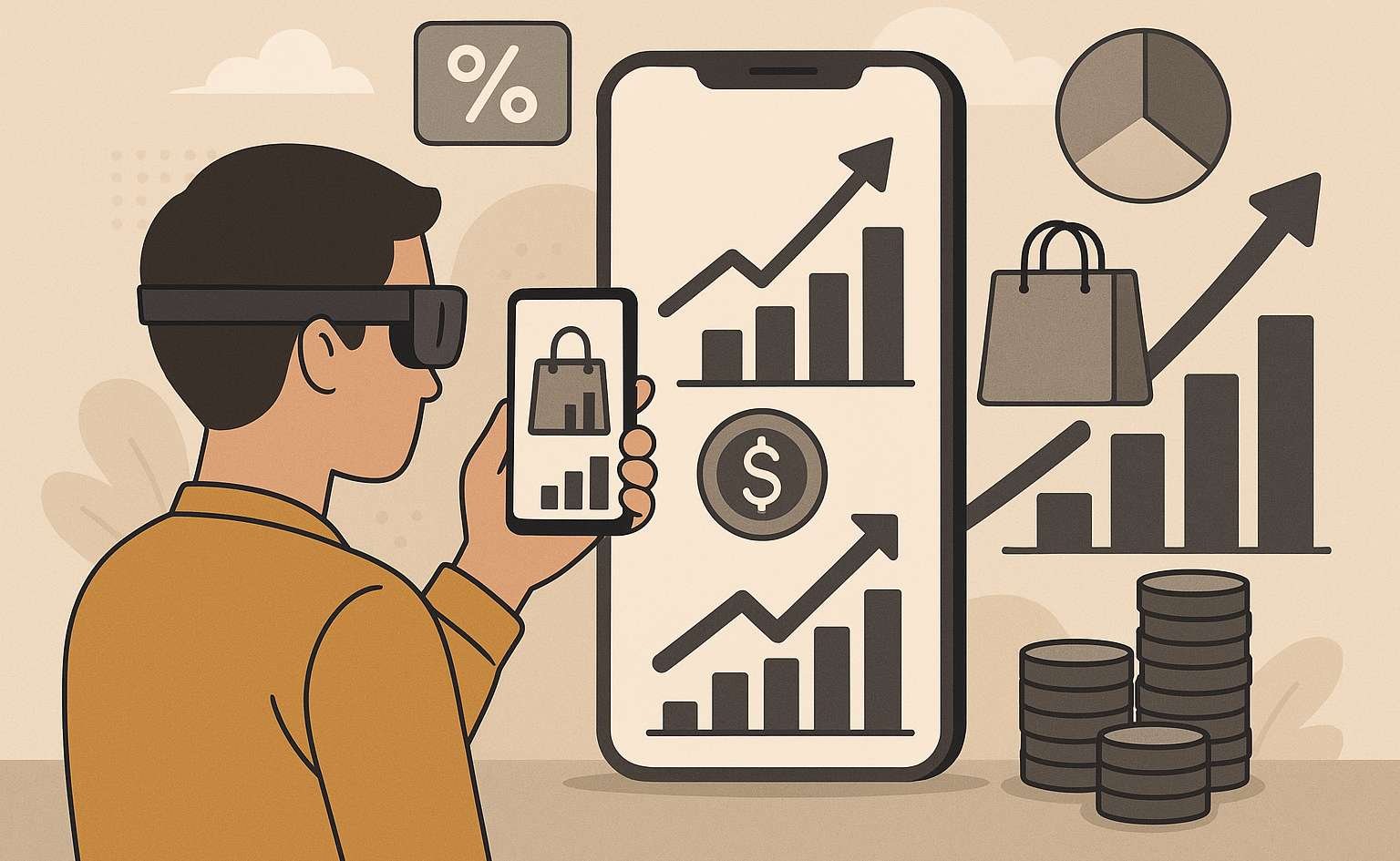
Quick level-set for anyone who needs it: Augmented reality overlays digital content onto the real world through your smartphone or AR glasses. Unlike VR (virtual reality) which puts you in a completely different world, AR in digital marketing enhances the world you’re already in.
Think Snapchat filters, Instagram effects, IKEA’s “place furniture in your room” app, or those wild Nike sneaker try-on features. That’s AR, and it’s become the secret weapon for brands that understand modern consumers want experiences, not interruptions.
The beautiful thing about an AR strategy? It turns passive viewers into active participants. Instead of scrolling past your ad like they’re dodging an ex at a party, they’re actually playing with your product, trying it on, or exploring it in 3D. Engagement rates for augmented reality advertising average 5-10x higher than traditional digital ads. Yeah, you read that right.
Why AR Marketing Is Eating Traditional Advertising’s Lunch
Let’s talk numbers because I know some of you need data to justify any decision to your stakeholders:
The Stats That Make CFOs Pay Attention:
- 71% of consumers say they’d shop more often if they used AR (Retail Perceptions)
- AR experiences increase engagement by 200% compared to non-AR equivalents
- Conversion rates for products with AR experiences are 94% higher than those without
- The AR advertising market is projected to hit $198 billion by 2025
But forget the stats for a second. Here’s the real reason AR advertising works: we’re living in the attention economy, and attention is harder to get than a PS5 at launch. AR doesn’t just capture attention—it holds it hostage (in the best way possible).
Traditional display ads? Users have developed banner blindness so severe they could stare directly at your ad and their brain would literally filter it out. Augmented reality ads force interaction. They’re experiential, shareable, and actually fun—three things banner ads will never be, no matter how many A/B tests you run.
Epic AR Marketing Examples That Crushed It (And What You Can Learn)
IKEA Place: The App That Made Furniture Shopping Not Suck
The Campaign: IKEA’s AR app lets you point your phone at your living room and see exactly how that MALM dresser would look before you spend six hours assembling it only to realize it’s too big.
Why It Worked: IKEA solved the biggest problem in furniture e-commerce—nobody knows if something will actually fit or look good in their space. Returns dropped, confidence went up, and customers could shop from their couch without the stress of measuring wrong and ending up with a tiny chair for a tiny room.
The Takeaway: Use AR technology in advertising to solve actual customer pain points, not just to be flashy. The best augmented marketing makes someone’s life easier.
Sephora Virtual Artist: Try Before You Buy (Without the Awkward Mall Trip)
The Campaign: Sephora’s AR feature lets you try on thousands of makeup products using your phone’s camera. No more walking around with seven different lipstick swatches on your arm like you’re running a modern art project.
Why It Worked: Buying makeup online is risky—colors look different on screens, skin tones vary, and returns are a hassle. Sephora’s AR branding positioned them as innovative while directly solving the “will this look good on me?” problem. Their conversion rates jumped 11% for products with AR try-on features.
The Takeaway: Augmented reality marketing shines brightest in industries where visualization matters. Fashion, beauty, home goods—if customers need to see it on themselves or in their space, AR is your answer.
Pepsi Max: The Bus Shelter That Blew Minds
The Campaign: Pepsi turned a London bus shelter into an AR experience where waiting commuters saw UFOs landing, tigers running down the street, and tentacles emerging from the pavement through what looked like a transparent shelter.
Why It Worked: It was unexpected, shareable, and generated millions in earned media. People filmed their reactions, news outlets covered it, and Pepsi got massive ROI from what was essentially a clever AR advertising campaign that cost a fraction of a traditional Super Bowl spot.
The Takeaway: Augmented reality ad campaigns don’t always need to sell directly. Sometimes the goal is cultural penetration and virality. Make people feel something, and they’ll do your marketing for you.
Nike: Sneakers That Jump Off the Screen
The Campaign: Nike’s SNKRS app uses AR to let sneakerheads unlock exclusive drops by pointing their phones at posters, billboards, or even specific locations around cities. It’s like a scavenger hunt where the treasure is limited-edition kicks.
Why It Worked: Nike gamified their entire launch strategy using AR in digital marketing. They created urgency, exclusivity, and a sense of community. Fans weren’t just buying shoes—they were participating in an experience. The SNKRS app has generated billions in revenue and made Nike the undisputed champion of sneaker marketing.
The Takeaway: Layer AR on top of your existing marketing assets. That billboard you’re already paying for? Make it interactive with an AR strategy and multiply its effectiveness.
Burger King: Burn That Ad (Literally)
The Campaign: In Brazil, Burger King created an AR app that let users “burn” competitors’ ads using their phone. Point your camera at a McDonald’s billboard, watch it go up in digital flames, and get a free Whopper coupon. Savage? Absolutely. Effective? The app was downloaded 300,000 times in the first week.
Why It Worked: It was provocative, fun, and turned advertising into a game. Plus, who doesn’t want to watch their competitor’s marketing budget literally burn while getting free food?
The Takeaway: AR advertising campaigns can be cheeky and bold. If your brand has personality, AR is the perfect canvas to show it off. Just make sure your legal team signs off first.
Gucci: Virtual Sneaker Try-Ons That Sell IRL Products
The Campaign: Gucci partnered with platforms like Snapchat and their own app to let users virtually try on luxury sneakers. Point, shoot, see yourself in $800 shoes without setting foot in a store.
Why It Worked: Luxury brands traditionally relied on the in-store experience. Gucci brought that experience online with augmented reality strategy, making luxury accessible (digitally, at least). They didn’t just sell shoes—they sold the feeling of wearing Gucci, which is really what luxury is all about.
The Takeaway: AR branding can elevate your brand perception. It’s not just functional—it’s aspirational.
Different Types of AR Marketing Strategies (Pick Your Fighter)
Product Visualization AR
This is the IKEA/Sephora approach. Let customers see your product in their environment or on themselves before buying. Perfect for:
- Furniture and home décor
- Beauty and cosmetics
- Fashion and accessories
- Jewelry and watches
Implementation tip: Start simple. Even a basic “place this item in your space” feature can boost conversions by 40-60%.
Gamified AR Experiences
The Pokémon GO strategy. Turn your marketing into a game that people actually want to play. Works for:
- Brand awareness campaigns
- Event activations
- Product launches
- Loyalty programs
Implementation tip: Make the game easy to understand but hard to master. Simple mechanics with satisfying rewards = addictive engagement.
Location-Based AR
Nike’s scavenger hunt approach. Tie AR experiences to physical locations to drive foot traffic or create buzz. Great for:
- Retail store promotions
- Event marketing
- Tourism and hospitality
- Restaurant marketing
Implementation tip: Make the reward worth the effort. Nobody’s traveling across town for a 10% off coupon they can get online.
Social Media AR Filters
The Snapchat/Instagram strategy. Create branded filters that users share, turning customers into your marketing team. Perfect for:
- Viral awareness campaigns
- Product launches
- Event coverage
- User-generated content campaigns
Implementation tip: Make filters that are genuinely fun or useful, not just branded billboards on people’s faces. Nobody wants to be a walking ad.
AR Packaging
Scan a product package and unlock exclusive content, instructions, or experiences. Ideal for:
- Premium products
- Collectibles
- Educational products
- Subscription boxes
Implementation tip: The AR content should add real value—tutorials, behind-the-scenes content, or exclusive deals. Don’t just slap AR on packaging for the sake of it.
How to Build Your Own AR Marketing Strategy (Without Losing Your Mind or Budget)
Step 1: Define Your Objective (And Actually Stick to It)
Are you trying to:
- Increase brand awareness?
- Drive product sales?
- Reduce returns?
- Create viral content?
- Educate customers?
Your augmented reality strategy needs a clear goal, or you’re just burning money on cool tech. Be specific. “We want to increase conversions on our furniture line by 25% by letting customers visualize products in their homes” beats “We should do AR because it’s trendy.”
Step 2: Know Your Audience’s Tech Comfort Level
Your 60-year-old customers might not be ready for elaborate AR advertising experiences. Your Gen Z audience? They’re literally waiting for you to catch up. Match the complexity of your AR marketing campaigns to your audience’s capabilities and expectations.
Step 3: Choose Your Platform
WebAR (browser-based): No app download needed, works on any smartphone. Lower barrier to entry, decent for simple experiences.
Social Media AR: Snapchat, Instagram, TikTok filters. Massive reach, easy sharing, but limited customization.
App-Based AR: More complex experiences, better quality, but requires users to download an app (good luck with that unless you’re already a major brand).
AR-Enabled E-commerce Platforms: Shopify, WooCommerce, and major e-commerce platforms now have built-in AR features. Easy implementation, solid results.
Step 4: Start Small, Scale Smart
You don’t need a million-dollar budget to test AR in digital marketing. Start with:
- A simple try-on feature for your hero product
- A basic Instagram filter for your next product launch
- A “place in space” feature for your top 10 products
Test, measure, iterate. If it works, scale up. If it doesn’t, you haven’t bet the farm.
Step 5: Make It Shareable
The best augmented reality ads create moments people want to share. Build in:
- Social sharing buttons
- Unique experiences worth posting about
- Incentives for sharing (contests, unlockable content, etc.)
If someone uses your AR experience and doesn’t immediately want to show their friends, you’re doing it wrong.
Step 6: Measure What Matters
Track metrics like:
- Engagement time (how long people interact)
- Completion rate (did they finish the experience?)
- Conversion lift (compared to non-AR traffic)
- Social shares and earned media
- Return rates (for product visualization AR)
Advertising in augmented reality is measurable. Use that advantage.
Common AR Marketing Mistakes (Learn From Others’ Pain)
Mistake #1: AR for AR’s Sake
Just because you can add AR doesn’t mean you should. If it doesn’t solve a problem or add genuine value, you’re just annoying people with tech gimmicks.
Mistake #2: Ignoring Load Times
Nothing kills an AR advertising campaign faster than making users wait 30 seconds for something to load. Optimize like your conversion rate depends on it (because it does).
Mistake #3: Forgetting to Promote It
You built an amazing AR experience—cool. Did you tell anyone? AR marketing campaigns need promotion just like everything else. Don’t assume users will magically discover it.
Mistake #4: Making It Too Complex
If your AR experience requires a tutorial, you’ve already lost half your audience. Simple, intuitive interactions win every time.
Mistake #5: Not Testing Across Devices
Your AR experience looks amazing on the latest iPhone? Great. What about Android users? Older devices? Test everywhere your customers are.
The Future of AR Marketing (And Why You Should Care Now)
Apple’s Vision Pro, Meta’s Ray-Ban glasses, and the upcoming wave of consumer AR devices are about to make augmented reality marketing as common as social media marketing. The brands that master AR strategy now will dominate when AR becomes mainstream.
We’re talking about a future where:
- Every product page has AR try-on by default
- Physical stores use AR to enhance the shopping experience
- AR branding is as essential as having a logo
- Virtual showrooms replace physical ones
The question isn’t whether AR will reshape marketing—it already has. The question is whether you’ll be ahead of the curve or playing catch-up.
Your AR Marketing Action Plan (Start Today, Not Tomorrow)
Week 1: Research AR platforms and tools. Check out 8thWall, Zappar, Blippar, or use built-in features on Shopify/Instagram.
Week 2: Define one specific use case for your business. Pick the lowest-hanging fruit—the easiest win with the biggest impact.
Week 3: Create a basic prototype or partner with an AR agency for a pilot project. Budget: $5k-$50k depending on complexity.
Week 4: Launch, promote, measure. Collect feedback ruthlessly.
Month 2+: Iterate based on data. Scale what works, kill what doesn’t.
The brands crushing it with augmented reality ad campaigns aren’t necessarily the ones with the biggest budgets—they’re the ones who started experimenting early and learned what works for their audience.
The Bottom Line: Reality Is Overrated Anyway
AR technology in advertising isn’t the future—it’s the present, and it’s eating everyone’s lunch. The examples we’ve covered prove one thing: augmented marketing works when it’s strategic, user-focused, and actually fun.
You don’t need Apple’s R&D budget to create compelling AR advertising campaigns. You need creativity, a clear strategy, and the guts to try something different while your competitors are still arguing about whether to increase their Facebook ad spend by 10%.
The beauty of AR in digital marketing is that it levels the playing field. A smart, well-executed AR experience from a small brand can generate more engagement than a lazy campaign from a fortune 500 company.
So here’s my challenge: stop reading about AR marketing and start doing it. Pick one product, create one AR experience, and see what happens. Test it on social media, measure the results, and iterate.
Because five years from now, every brand will have AR marketing. The question is whether you’ll be leading the pack or desperately trying to catch up.
The augmented future is here. Are you in, or are you going to keep doing the same marketing that stopped working three years ago?
Ready to dive into AR marketing but need some guidance? Start by checking out free AR tools like Spark AR Studio (Facebook/Instagram), Lens Studio (Snapchat), or Effect House (TikTok). You can literally create your first AR experience this week. No excuses.