

Look, I’m gonna level with you—if you’re throwing money at marketing without understanding your conversion funnel, you might as well be burning cash for warmth. Dramatic? Maybe. True? Absolutely.
Here’s the reality: you can have the coolest product, the slickest website, and the most fire content on the internet, but if your conversion funnel has more holes than Swiss cheese, you’re leaving serious money on the table. And honestly, nobody’s got time (or budget) for that.
What Actually Is a Conversion Funnel (And Why Should You Care)?
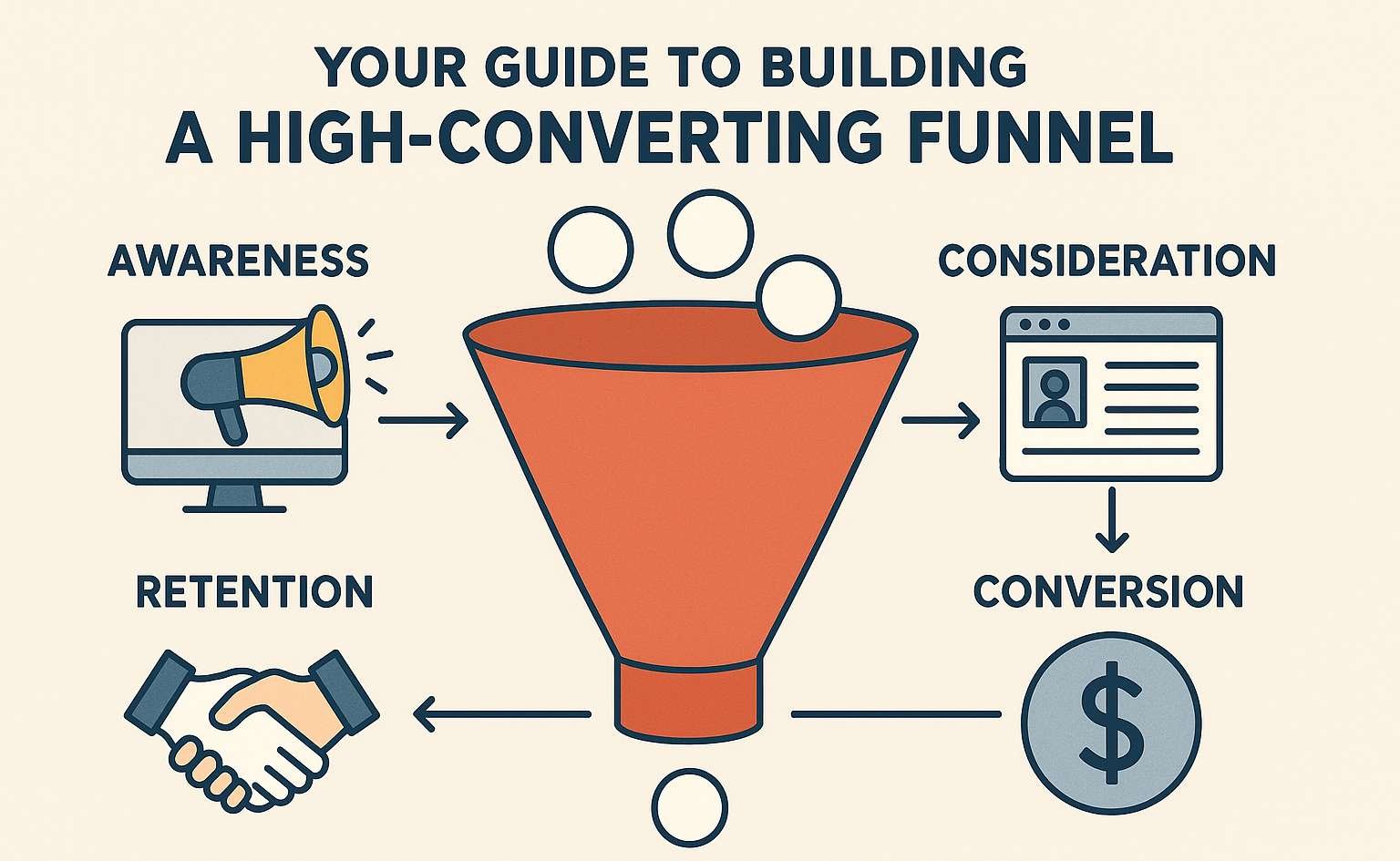
Let’s strip away the corporate jargon for a second. A conversion funnel is basically the journey someone takes from “Who are you?” to “Take my money!” It’s called a funnel because—surprise—it looks like one. Lots of people enter at the top, and fewer make it to the bottom where the actual buying happens.
Think of it like this: imagine you’re throwing a party. The conversion funnel is the path from seeing your Instagram story about the party (awareness), to thinking “That sounds fun” (interest), to checking if you’re free that night (consideration), to actually showing up (conversion). Not everyone who sees your story will come, and that’s exactly how conversion funnel marketing works.
The difference between a good funnel and a trash one? A good funnel loses people for legitimate reasons (they’re not your target audience, can’t afford it, wrong timing). A bad funnel loses people because of fixable problems—confusing messaging, broken checkout process, or just generally making it harder than it needs to be to give you money.
The Anatomy of a Conversion Funnel: Breaking It Down
Top of Funnel (TOFU): Awareness Stage
This is where strangers become aware you exist. They might stumble on your Instagram ad, find your blog post on Google, or hear about you from a friend who won’t shut up about your product. The funnel conversion rate at this stage is all about getting eyeballs on your brand.
Your job here isn’t to sell hard—it’s to provide value and start building trust. Think helpful content, entertaining posts, and solutions to problems your audience actually has. Nobody likes the person who shows up to the party and immediately tries to sell them insurance. Same energy applies online.
Common TOFU Channels:
- Social media content
- Blog posts and SEO
- Paid advertising
- PR and media coverage
- Word of mouth and referrals
Middle of Funnel (MOFU): Consideration Stage
Alright, they know you exist—now they’re deciding if you’re worth their time and money. This is where conversion funnel optimization really starts to matter. People are comparing you to competitors, reading reviews, watching demos, and generally doing their homework.
This stage is where you need to differentiate yourself and address objections before they become deal-breakers. Provide detailed product information, case studies, testimonials, and content that demonstrates your expertise and value.
Effective MOFU Content:
- Product comparison guides
- Customer testimonials and case studies
- Free trials or samples
- Email nurture sequences
- Webinars and demos
- Detailed product pages
Bottom of Funnel (BOFU): Decision Stage
This is crunch time. They’re ready to buy—don’t screw it up now. The conversion funnel at this stage needs to be smooth, frictionless, and confidence-inspiring. Remove any last-minute doubts and make the purchase process as easy as humanly possible.
BOFU Must-Haves:
- Clear pricing information
- Simple checkout process
- Multiple payment options
- Security badges and trust signals
- Money-back guarantees
- Live chat support
- FAQs addressing common concerns
Post-Conversion: The Often-Forgotten Stage
Here’s where most businesses drop the ball—they think the funnel ends at purchase. Wrong. The real money is in turning one-time buyers into repeat customers and advocates. This is conversion funnel marketing on expert mode.
Keep the relationship alive with excellent customer service, valuable follow-up content, loyalty programs, and opportunities for feedback. A customer who loves you will bring more customers through word-of-mouth than your ads ever could.
Why Your Funnel Conversion Rate Probably Sucks (And How to Fix It)
Problem #1: You’re Attracting the Wrong People
You’re getting traffic, but it’s like inviting people who hate parties to your party. High top-of-funnel numbers mean nothing if those people were never going to buy.
The Fix: Get laser-focused on your ideal customer. Refine your targeting in ads, create content that speaks specifically to your audience’s pain points, and don’t be afraid to repel people who aren’t a fit. It’s better to have 100 perfect-fit visitors than 10,000 wrong ones.
Problem #2: Your Messaging is Confusing AF
If someone lands on your site and can’t immediately figure out what you do, who it’s for, and why they should care—they’re gone. You have seconds to communicate value, and corporate buzzword soup isn’t cutting it.
The Fix: Clarity beats cleverness every single time. Use simple language, lead with benefits (not features), and make your value proposition immediately obvious. Test your messaging on someone outside your industry—if they don’t get it, rewrite it.
Problem #3: Your Website is Slow or Broken
Nothing kills conversion funnel optimization faster than technical issues. Slow load times, broken links, mobile unfriendly design, complicated navigation—these are all conversion killers.
The Fix: Run regular technical audits. Test your site on multiple devices and browsers. Optimize images and code for speed. Use tools like Google PageSpeed Insights, and actually fix the issues it identifies. Yes, it’s boring. Yes, it matters enormously.
Problem #4: You’re Not Building Trust
People buy from brands they trust, and trust takes more than a professional-looking website. Without social proof, security signals, and transparency, people bail before converting.
The Fix: Display customer reviews prominently, showcase real results with case studies, add security badges to checkout pages, be transparent about shipping and returns, and make it easy to contact you. If you’re hiding contact information or don’t have any reviews visible, you look sketchy—even if you’re not.
Problem #5: Your Checkout Process is a Nightmare
You got them all the way to the bottom of the conversion funnel, and then you made them create an account, fill out seventeen fields, and solve a captcha that would stump NASA scientists. Congratulations, you played yourself.
The Fix: Simplify everything. Enable guest checkout, reduce form fields to the bare minimum, offer multiple payment options, show progress indicators, save cart information, and for the love of all that is holy, make sure your checkout works perfectly on mobile.
Conversion Funnel Optimization Strategies That Actually Work
Strategy #1: Map Out Your Current Funnel
You can’t optimize what you don’t understand. Document every step of your current conversion funnel—where traffic comes from, what pages they visit, where they drop off, and where they convert. Use analytics tools like Google Analytics, Hotjar, or Mixpanel to get the real data.
Create a visual map showing the typical customer journey. Identify the biggest drop-off points—these are your opportunities. If 80% of people abandon at the same stage, that’s not random. Something specific is wrong, and it’s fixable.
Strategy #2: A/B Test Everything (But Smartly)
A/B testing is conversion funnel marketing gold, but don’t be random about it. Test big, impactful changes first—headlines, CTAs, page layouts, pricing displays. Testing button colors before you’ve nailed your core messaging is like rearranging deck chairs on the Titanic.
Test one thing at a time so you know what actually moved the needle. Give tests enough time and traffic to reach statistical significance. And when something works, implement it and move on to the next test. Optimization is a continuous process, not a one-and-done deal.
Strategy #3: Personalize the Experience
Generic marketing is dying, and thank god for that. Use the data you have to personalize messaging, product recommendations, and content based on where someone is in the conversion funnel and what you know about them.
Someone who visited three times but hasn’t bought? Show them social proof and testimonials. First-time visitor? Focus on value proposition and education. Returning customer? Recommend complementary products. This level of conversion funnel optimization can dramatically improve your funnel conversion rate.
Strategy #4: Implement Exit-Intent Popups (The Right Way)
Yes, popups can be annoying. But exit-intent popups—triggered when someone’s about to leave—can recover otherwise lost conversions. The key is offering real value: a discount, free shipping, a helpful resource, or addressing a common objection.
Don’t just slap up a generic “Don’t go!” message. Make it specific to where they are in the funnel. Someone abandoning a cart might respond to free shipping. Someone leaving a blog post might want a downloadable guide. Context matters.
Strategy #5: Optimize for Mobile Like Your Business Depends on It
Because it literally does. More than half of web traffic is mobile, and if your conversion funnel isn’t mobile-optimized, you’re hemorrhaging potential customers. Mobile users are less patient, have smaller screens, and are often multitasking.
Simplify navigation, use larger buttons, minimize typing, optimize images for mobile speeds, and test everything on actual mobile devices. What looks great on your laptop might be unusable on a phone.
Strategy #6: Use Retargeting to Bring People Back
Most people don’t convert on their first visit—that’s just reality. Retargeting ads remind people about your brand when they’re on other sites, bringing them back into your conversion funnel. It’s not creepy (well, don’t make it creepy)—it’s strategic marketing.
Segment your retargeting based on behavior. Someone who viewed a product page should see different ads than someone who abandoned a cart. Tailor messaging to address likely objections or highlight benefits relevant to what they were looking at.
Strategy #7: Speed Up Everything
Every second of load time kills conversions. Amazon found that every 100ms of latency cost them 1% in sales. You probably can’t afford to lose 1% of sales, so speed matters.
Compress images, minimize code, use caching, invest in quality hosting, and regularly audit site speed. Fast sites rank better in search, provide better user experience, and convert at higher rates. It’s a win-win-win.
Strategy #8: Create Urgency (Without Being Scammy)
Genuine urgency improves conversion funnel optimization by encouraging action. Limited-time offers, low stock warnings, and countdown timers work—when they’re real. Fake scarcity destroys trust faster than almost anything else.
Real urgency examples: actual limited inventory, genuine flash sales, seasonal offers, early-bird pricing. Fake urgency: countdown timers that reset, “Only 2 left!” that’s always 2, fake low stock warnings. Don’t be that brand.
Advanced Conversion Funnel Marketing Tactics
Multi-Step Forms That Don’t Suck
If you need to collect significant information, break long forms into multiple steps. This improves completion rates because each step feels manageable, creates a sense of progress, and commits people gradually. Just make sure to show progress indicators and save information as they go.
Social Proof at Every Stage
Strategically place testimonials, reviews, user counts, trust badges, and case studies throughout your conversion funnel. Different types of social proof work better at different stages—educational content benefits from expert endorsements, product pages need user reviews, checkout pages need security signals.
Abandoned Cart Recovery
Cart abandonment is brutal—average rates hover around 70%. Implement automated email sequences to recover abandoned carts. The first email should go out within an hour, focusing on helpfulness (“Did you have questions?”) rather than pushiness. Subsequent emails can include incentives if needed.
Live Chat for Real-Time Conversion Assistance
Adding live chat can significantly boost your funnel conversion rate by addressing concerns in real-time. People can get immediate answers without leaving the page. Even better, use chatbots for common questions with seamless handoff to humans for complex issues.
Video Content Throughout the Funnel
Video is incredibly effective at every funnel stage. Explainer videos for awareness, product demos for consideration, testimonial videos for decision. Video content increases engagement, improves understanding, and builds emotional connection—all conversion boosters.
Measuring Success: KPIs That Matter
Overall Conversion Rate
The percentage of visitors who complete your desired action. This is your headline number, but it doesn’t tell the whole story on its own.
Stage-Specific Conversion Rates
Track conversion rates between each funnel stage. This reveals exactly where your conversion funnel is leaking and where to focus optimization efforts.
Cost Per Acquisition (CPA)
How much you’re spending to acquire each customer. Even if conversion rates are decent, if your CPA is too high, you’re not profitable.
Customer Lifetime Value (CLV)
The total value a customer brings over their entire relationship with your brand. This helps you understand how much you can afford to spend on acquisition.
Time to Conversion
How long it takes from first touch to purchase. Longer cycles aren’t necessarily bad, but understanding timing helps you plan marketing activities and nurture sequences appropriately.
Drop-Off Points
Identify exactly where people leave your conversion funnel. High drop-off at specific stages indicates problems you need to address.
Common Conversion Funnel Marketing Mistakes to Avoid
Mistake #1: Optimizing for the Wrong Metric Getting lots of traffic means nothing if it doesn’t convert. Focus on quality over quantity and optimize for revenue, not just visitor numbers.
Mistake #2: Ignoring Qualitative Data Numbers tell you what’s happening, but not why. Use surveys, user testing, and customer interviews to understand the human reasons behind the data.
Mistake #3: Making Too Many Changes at Once Change everything simultaneously and you won’t know what worked. Systematic testing beats throwing spaghetti at the wall.
Mistake #4: Set-It-and-Forget-It Mentality Conversion funnel optimization isn’t a one-time project. Consumer behavior changes, competitors evolve, and platforms update. Continuous optimization is necessary for sustained success.
Mistake #5: Focusing Only on New Customers The easiest sale is to existing customers. Don’t neglect post-purchase optimization and retention strategies while chasing new acquisitions.
The Future of Conversion Funnel Optimization
AI and Machine Learning
Predictive analytics will increasingly identify which prospects are most likely to convert, allowing for smarter resource allocation. AI-powered personalization will deliver unique experiences to each visitor based on real-time behavior analysis.
Voice and Visual Search
As voice assistants and visual search grow, conversion funnels will need to adapt. Optimizing for these search methods and creating friction-free purchase paths for voice commerce will become essential.
Privacy-First Marketing
With increasing privacy regulations and the death of third-party cookies, conversion funnel marketing will rely more on first-party data, contextual targeting, and building direct relationships with customers.
Omnichannel Integration
The lines between online and offline will continue blurring. Successful conversion funnels will seamlessly integrate multiple channels—social media, websites, physical stores, mobile apps—into cohesive experiences.
Putting It All Together: Your Action Plan
Ready to actually improve your funnel conversion rate? Here’s your roadmap:
Week 1: Audit and Map Document your current conversion funnel, identify drop-off points, and prioritize issues based on impact.
Week 2-3: Quick Wins Fix technical issues, improve page speed, simplify forms, and add obvious missing elements like trust signals or CTAs.
Week 4-6: Testing Phase Implement A/B tests on high-impact elements. Test headlines, CTAs, layouts, and key messaging.
Week 7-8: Personalization Set up segmentation and personalized experiences based on funnel stage and user behavior.
Ongoing: Measure, Learn, Optimize Regular review of metrics, continuous testing, and iterative improvements. Conversion funnel optimization never stops.
The Real Talk Conclusion
Here’s the bottom line: conversion funnel marketing isn’t rocket science, but it does require attention, testing, and willingness to make changes based on data rather than gut feelings. Your conversion funnel is either making you money or costing you money—there’s no neutral ground.
The brands winning right now aren’t necessarily the ones with the biggest budgets—they’re the ones with the tightest funnels. They understand their customer journey, eliminate friction at every stage, and continuously test and improve.
Start with your biggest problems, implement changes systematically, measure results honestly, and keep iterating. Small improvements in funnel conversion rate compound into significant revenue increases. A 2% improvement might not sound sexy, but if it translates to $100K in additional annual revenue, I bet you’ll take it.
Stop leaving money on the table. Your conversion funnel is either your competitive advantage or your Achilles heel. Choose wisely, optimize ruthlessly, and watch your business grow.
Now quit reading and go fix your funnel. Your bank account will thank you.