

Let’s cut through the corporate jargon for a second. “Digital transformation” has become one of those buzzwords that gets thrown around in every meeting, LinkedIn post, and business proposal. But here’s what nobody tells you: digital transformation isn’t about buying fancy software or slapping an AI chatbot on your website and calling it a day.
It’s about fundamentally reimagining how your customers experience your brand in a world where everyone’s phone is basically an extension of their hand.
And if you’re not thinking about customer digital transformation right now, you’re already behind. Way behind.
What Digital Transformation Customer Experience Actually Means
Okay, so what are we really talking about here? Digital transformation customer experience is the process of leveraging technology to create seamless, personalized, and frankly delightful interactions across every touchpoint of your customer journey.
Think about it: when was the last time you called a company’s customer service line and thought, “Wow, that was amazing”? Probably never, right? Now compare that to ordering food on DoorDash or getting help through a well-designed chat interface. That difference? That’s digital transformation in action.
The brutal truth: Your customers don’t care about your “digital transformation strategy.” They care about whether you make their lives easier or harder. Period.
Why Digital Transformation to Improve Customer Experience Isn’t Optional Anymore
Here’s a reality check. According to recent studies, 73% of customers say experience is a key factor in their purchasing decisions. But here’s the kicker—only 49% of companies say they’re actually delivering great customer experiences.
That gap? That’s opportunity knocking. Loudly.
What changed?
- Your customers grew up with Netflix, Spotify, and Amazon Prime
- Their expectations for personalization are through the roof
- They expect instant responses (we’re talking minutes, not hours)
- They’ll switch to a competitor after one bad experience
- They want to interact with you on their terms, not yours
If you’re still making customers fill out paper forms or wait 48 hours for email responses, you’re basically asking them to take their business elsewhere.
The Real Components of Digital Transformation Customer Service
Let’s break down what actually matters when you’re transforming your customer service game.
1. Omnichannel Integration (aka Being Everywhere Your Customers Are)
Your customers don’t think in channels—they think in conversations. They might start on Instagram DM, move to your website chat, and finish via email. And guess what? They expect you to remember the entire conversation.
What good looks like:
- Unified customer profiles across all platforms
- Conversation history that follows customers everywhere
- Seamless handoffs between channels (and humans)
- Consistent experience whether they’re on mobile, desktop, or in-store
Real talk: If your customer has to repeat their problem when they switch channels, you’ve already lost. This isn’t just annoying—it’s straight-up disrespectful of their time.
How to implement it: Start with a solid CRM that integrates with your communication platforms. Salesforce, HubSpot, and Zendesk all offer omnichannel capabilities. But here’s the key: it’s not about the tools, it’s about training your team to actually use them properly.
2. AI and Automation (The Smart Way)
Let’s address the elephant in the room: AI isn’t going to replace your customer service team. But it will make them superhuman.
Where AI actually shines:
- Answering repetitive questions 24/7 (nobody needs a human to tell them your business hours)
- Routing complex issues to the right specialist
- Predicting customer needs before they ask
- Analyzing sentiment to flag frustrated customers
- Automating follow-ups and check-ins
Where AI sucks:
- Handling emotional situations
- Making judgment calls on exceptions
- Building genuine relationships
- Understanding nuanced context
The winning strategy: Use AI to handle the boring stuff so your humans can focus on the moments that actually matter. Your chatbot can handle “Where’s my order?” Your human team should handle “I’m really disappointed with this product.”
3. Data-Driven Personalization
Here’s where digital transformation customer experience gets really interesting. Every interaction creates data. Every click, every purchase, every support ticket—it all tells a story about what your customer wants and needs.
What personalization looks like in 2025:
- Product recommendations based on actual behavior, not just demographics
- Dynamic pricing and offers that match customer value
- Proactive service (“Hey, we noticed you might need help with…”)
- Content that adapts to user preferences and context
- Predictive support that solves problems before they happen
The creepy line: There’s a fine line between “Wow, they really get me” and “This is creepy, how do they know that?” Stay on the right side by being transparent about data usage and letting customers control their privacy settings.
Pro tip: Start simple. If you can get personalized email subject lines right, you’re already ahead of 80% of businesses.
4. Self-Service Options That Don’t Suck
Let’s be honest: most FAQ pages are trash. They’re organized by how your company thinks, not how customers actually search for help.
Digital transformation in self-service means:
- AI-powered search that understands natural language
- Video tutorials for visual learners
- Interactive guides that walk customers through solutions
- Community forums where customers help each other
- In-app contextual help that appears exactly when needed
The test: If your customers can’t solve simple problems themselves in under 2 minutes, your self-service needs work.
Real example: Look at how Notion handles documentation. Searchable, visual, with templates and examples. Compare that to a typical software manual from 2010. Night and day difference.
Digital Transformation in Marketing: The Customer Experience Connection
Here’s where things get spicy. Your marketing and customer experience can’t be separate silos anymore. They’re two sides of the same coin.
The New Marketing Playbook
Traditional marketing: Interrupt people with ads, hope they buy, repeat Digital transformation marketing: Create value at every touchpoint, build relationships, turn customers into advocates
What this looks like:
- Content that actually helps: Educational resources that solve real problems
- Interactive experiences: Quizzes, calculators, configurators that engage users
- Social proof done right: Real customer stories, not fake testimonials
- Community building: Creating spaces where customers connect with each other
- Influencer partnerships: Authentic collaborations, not paid shills
Marketing Automation That Feels Human
The goal isn’t to automate relationships—it’s to automate the boring parts so you can focus on building real connections.
Smart automation:
- Welcome sequences that adapt based on user behavior
- Abandoned cart reminders with actual value (not just “You forgot this!”)
- Re-engagement campaigns that bring back inactive customers
- Birthday and milestone celebrations
- Post-purchase education and support
What separates good from great: Great automation feels like a helpful friend, not a robot. Use customer data to make communications relevant, but keep the human voice.
The Digital Transformation Customer Service Framework
Ready to actually implement this stuff? Here’s your roadmap:
Phase 1: Audit Your Current State (Weeks 1-4)
What you need to know:
- Map every customer touchpoint (yes, every single one)
- Identify friction points where customers get stuck
- Measure current metrics (response time, satisfaction scores, resolution rates)
- Survey customers about their experience (and actually listen)
- Benchmark against competitors
Tool stack: Mystery shopping your own business is eye-opening. Create fake customer profiles and go through your entire journey. Where do things break down?
Phase 2: Pick Your Battles (Week 5-6)
You can’t fix everything at once. Pick 2-3 high-impact, low-effort improvements to start.
Quick wins:
- Implement live chat on high-traffic pages
- Set up automated email responses that actually help
- Create a proper knowledge base
- Train team on one new tool or process
Long-term projects:
- Build omnichannel integration
- Implement AI capabilities
- Redesign customer journey from scratch
- Launch customer success program
Phase 3: Build Your Tech Stack (Weeks 7-12)
Essential tools for digital transformation customer experience:
Communication platforms:
- Intercom, Drift, or Zendesk for chat and messaging
- Twilio for SMS and voice
- Front or Help Scout for email management
CRM and data:
- Salesforce, HubSpot, or Pipedrive for customer data
- Segment for data integration
- Amplitude or Mixpanel for behavioral analytics
Automation:
- Zapier or Make for workflow automation
- Customer.io or Klaviyo for email automation
- ManyChat for social media automation
AI and intelligence:
- OpenAI API for custom AI implementations
- Gong or Chorus for conversation intelligence
- Brandwatch for social listening
Reality check: Don’t try to implement everything at once. Start with a solid CRM and communication platform, then add tools as you identify specific needs.
Phase 4: Train Your Team (Ongoing)
Technology is only 30% of digital transformation. The other 70% is people and processes.
What your team needs:
- Technical training on new tools
- Soft skills for digital communication
- Empowerment to make decisions
- Clear guidelines on AI vs. human escalation
- Regular feedback and coaching
The mindset shift: Your customer service team isn’t a cost center—they’re your growth engine. Treat them accordingly.
Phase 5: Measure, Learn, Adapt (Forever)
Digital transformation to improve customer experience isn’t a project with an end date. It’s a continuous evolution.
Metrics that matter:
- Customer Satisfaction Score (CSAT)
- Net Promoter Score (NPS)
- Customer Effort Score (CES)
- First Response Time
- Resolution Time
- Self-Service Success Rate
- Customer Lifetime Value
- Churn Rate
Set up feedback loops: Weekly reviews of key metrics, monthly deep dives into trends, quarterly strategy adjustments.
Common Digital Transformation Mistakes (And How to Avoid Them)
Mistake #1: Technology First, Customer Second
The biggest trap? Buying shiny new tools because they’re cool, not because they solve customer problems.
The fix: Start with customer pain points, then find technology solutions. Not the other way around.
Mistake #2: Forgetting About Your Team
You know what kills digital transformation? When leadership buys expensive software and expects the team to figure it out on their own.
The fix: Budget 30% of your tech investment for training and change management. Seriously.
Mistake #3: Treating It Like a One-Time Project
Digital transformation isn’t something you “complete.” It’s an ongoing process of adaptation and improvement.
The fix: Build continuous improvement into your culture. Make experimentation and iteration part of how you work.
Mistake #4: Ignoring the Human Touch
Yes, automation is powerful. No, it can’t replace genuine human connection for complex or emotional situations.
The fix: Use technology to enhance human capabilities, not replace them. Your chatbot should make your human team more effective, not obsolete.
Mistake #5: Not Measuring the Right Things
Vanity metrics like “number of AI interactions” don’t tell you if customers are actually happier.
The fix: Focus on outcomes that matter to customers and business results. Are you making customers’ lives better? Are they staying longer and spending more?
Real-World Examples of Digital Transformation Done Right
Example 1: The DTC Brand That Gets It
A clothing brand implemented a virtual fitting room using AR technology. Customers could see how clothes would look on their body type before ordering. Result? 35% reduction in returns and a massive boost in customer satisfaction.
The lesson: Use technology to solve real customer problems (in this case, “Will this fit me?”), not just to be trendy.
Example 2: The B2B Company That Humanized Digital
A software company replaced their generic chatbot with a hybrid model—AI handled initial questions, but seamlessly connected customers to human experts when needed. They also trained their team to include video messages in support responses.
The result: 60% faster resolution times and NPS scores that went through the roof.
The lesson: Digital doesn’t mean impersonal. Use technology to be more human, not less.
Example 3: The Bank That Reinvented Customer Service
A traditional bank launched a mobile app with built-in financial coaching, automated savings tools, and instant customer support. They combined AI-driven insights with human financial advisors.
The impact: Younger customers who normally avoided banks became their fastest-growing segment.
The lesson: Meet customers where they are (on their phones) and provide value beyond your core product.
The Future of Customer Digital Transformation
So what’s next? Here’s what’s coming down the pipeline:
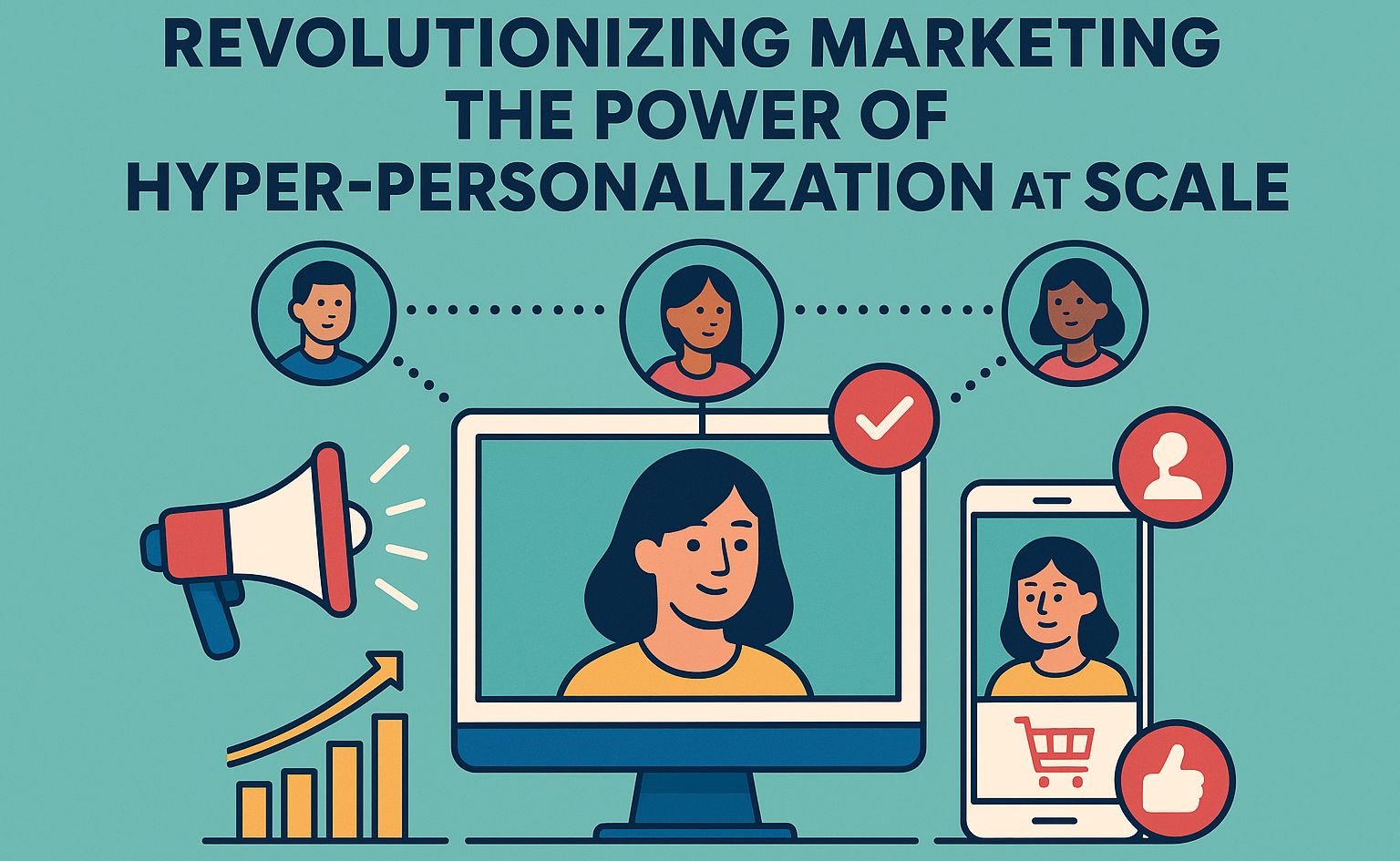
Hyper-personalization at scale: AI will enable truly 1-to-1 experiences for millions of customers simultaneously.
Predictive service: Companies will solve problems before customers know they have them.
Voice and conversational AI: Natural language interfaces will replace clunky menus and forms.
Immersive experiences: AR and VR will transform how customers interact with products and brands.
Blockchain for trust: Transparent, verifiable customer data management and loyalty programs.
The constant: Regardless of technology, the winners will be companies that genuinely care about making customers’ lives better.
Your Action Plan: Starting Today
Look, you don’t need to overhaul everything overnight. But you do need to start moving.
This week:
- Map your customer journey and identify the biggest friction point
- Survey 10 customers about their experience
- Test your own customer service (seriously, go through it yourself)
This month:
- Implement one quick-win improvement
- Set up basic analytics to track customer behavior
- Train your team on one new tool or skill
This quarter:
- Launch one major digital transformation initiative
- Build feedback loops to measure impact
- Start planning your next phase
This year:
- Transform your most important customer touchpoints
- Build a culture of continuous improvement
- Measure actual business impact (revenue, retention, satisfaction)
Final Thoughts: It’s About the Journey, Not the Destination
Here’s the thing about digital transformation customer experience: it’s never “done.” Customer expectations keep rising, technology keeps evolving, and your competition keeps innovating.
But that’s actually exciting. It means there’s always room to get better, always new ways to delight customers, always opportunities to stand out.
The businesses crushing it right now aren’t necessarily the ones with the biggest budgets or the fanciest tech. They’re the ones that truly understand their customers, move fast, and aren’t afraid to try new things.
So stop overthinking it. Pick one thing from this article and implement it this week. Then pick another next week. Progress over perfection.
Your customers are waiting. And trust me, they’ll notice when you start actually caring about their experience.
Now go build something awesome.
What’s your biggest challenge with digital transformation customer service? Drop a comment—let’s figure this out together.