

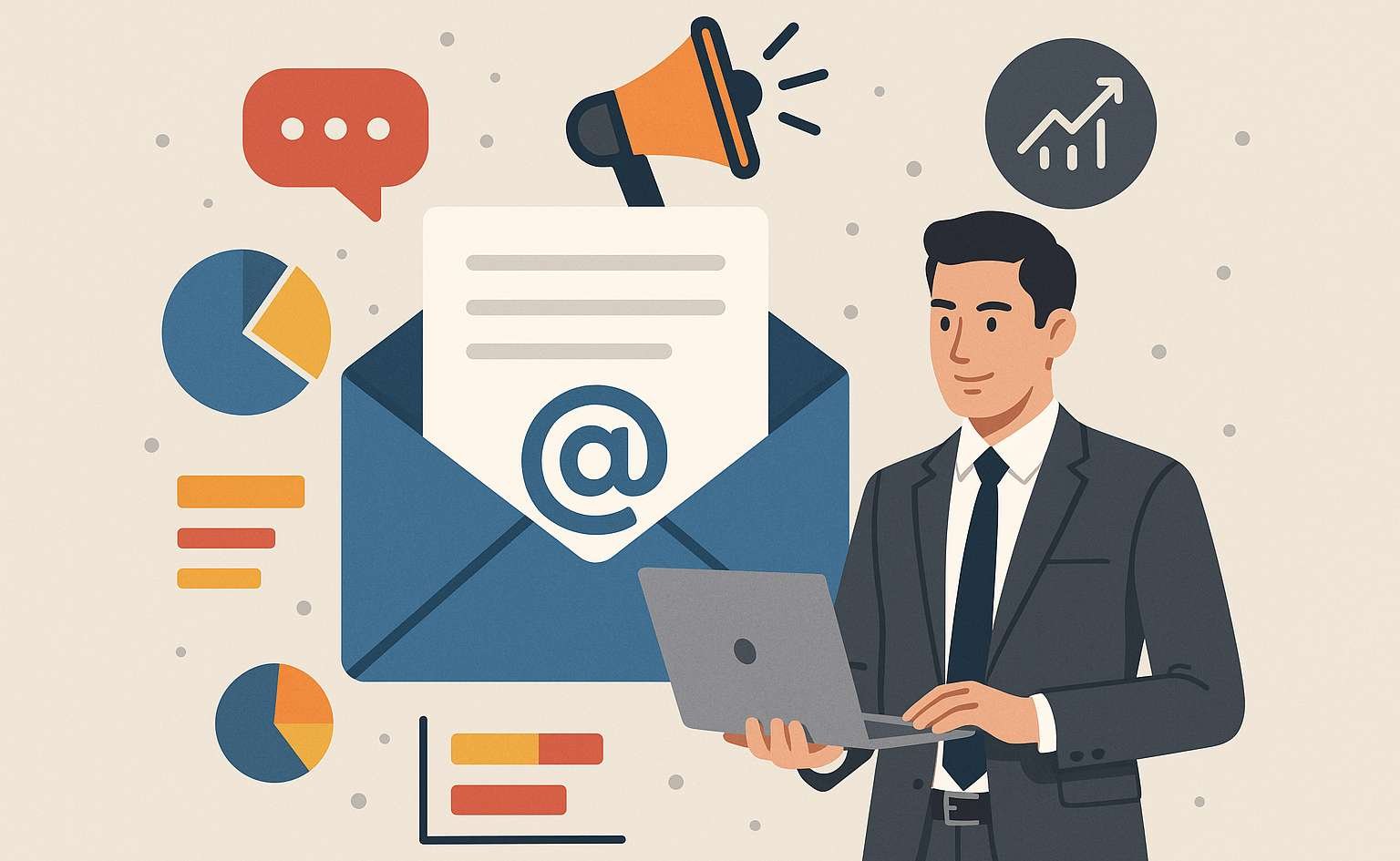
Look, I know what you’re thinking. “Email marketing? Isn’t that, like, super old school?” Here’s the plot twist: while everyone’s chasing the next TikTok trend or Instagram algorithm hack, smart marketers are quietly building empires through their inboxes. Yeah, I said it. Email marketing is still the MVP of digital marketing, and I’m about to show you why—plus how you can actually make money from it.
Why Email Marketing Still Slaps in 2024
Let me hit you with some facts that’ll blow your mind: for every dollar spent on email marketing, the average return is $42. That’s a 4,200% ROI. Try getting that from your Instagram ads. Social media platforms come and go (RIP Vine), but email? It’s been here since the dawn of the internet and isn’t going anywhere.
The beauty of email marketing lies in one simple truth: you own your list. Instagram could delete your account tomorrow (it happens), but your email list? That’s yours forever. It’s like having a direct hotline to your customers’ brains, minus the creepy telemarketing vibes.
Understanding Email Marketing Terms (Without the Boring Lecture)
Before we dive deep, let’s decode some email marketing terms you’ll hear thrown around. Think of this as your survival guide to not looking like a complete newbie in marketing meetings.
Open Rate: The percentage of people who actually opened your email. If you’re getting 20-25%, you’re crushing it. Anything below 15%? Time to work on those subject lines.
Click-Through Rate (CTR): How many people clicked on links in your email. This is where the magic happens—these are your engaged peeps.
Conversion Rate: The holy grail. This measures how many people actually did what you wanted them to do (bought something, signed up, etc.).
Segmentation: Splitting your email list into smaller groups based on interests, behavior, or demographics. It’s like creating different playlists for different moods.
Automation: Setting up emails to send automatically based on triggers. Basically, making money while you sleep. Chef’s kiss.
A/B Testing: Sending two versions of an email to see which performs better. It’s like choosing between two outfits, but with data.
How to Get Emails for Email Marketing (The Ethical Way)
Alright, so you’re convinced. Now you’re probably wondering, “how to get emails for email marketing?” First rule: never, ever buy email lists. Seriously, don’t do it. It’s the marketing equivalent of sliding into DMs with copy-paste pickup lines. Desperate and ineffective.
Here’s what actually works:
1. Create Irresistible Lead Magnets
Offer something valuable in exchange for an email address. This could be:
- Free ebooks or guides
- Exclusive discount codes
- Access to webinars or masterclasses
- Templates or tools
- Early access to new products
The key is making it so good that people would be stupid not to sign up. I’m talking “shut up and take my email” levels of value.
2. Optimize Your Website Like a Boss
Your website should have sign-up forms everywhere (but not in an annoying way). Think:
- Pop-ups that trigger when someone’s about to leave (exit-intent)
- Embedded forms in blog posts
- Footer sign-up sections
- Slide-in forms after scrolling
Pro tip: Keep it simple. Nobody wants to fill out a 20-field form just to get your newsletter.
3. Leverage Social Media
Use your existing social media following to build your email list. Run contests, share exclusive content for subscribers, or create urgency with limited-time offers. Your Instagram bio should basically scream “sign up for my emails” (but cooler).
4. Content Upgrades
Offering blog-specific downloadables is pure gold. Reading an article about productivity? Boom—offer a free productivity planner. It’s targeted, relevant, and converts like crazy.
Email Marketing Career: Is It Worth It?
Let’s talk about email marketing career opportunities because this field is seriously underrated. While everyone’s trying to become influencers or social media managers, email marketing specialists are getting hired left and right with salaries that’ll make your jaw drop.
Entry-level email marketing positions start around $45,000-$55,000 annually, but experienced specialists? We’re talking $80,000-$120,000+. And the best part? You can freelance and work from literally anywhere. Beach in Bali while optimizing email campaigns? Yes, please.
The skills you need aren’t rocket science either:
- Copywriting (learning to write emails that don’t suck)
- Basic HTML/CSS (enough to customize templates)
- Analytics (understanding what numbers matter)
- Marketing automation platforms (Mailchimp, Klaviyo, HubSpot)
- Creativity and testing mindset
The demand for email marketers isn’t slowing down. As businesses realize they need owned channels (not just rented social media space), email marketing skills become increasingly valuable.
Send Email and Earn Money: Making Your First Dollar
Here’s where it gets exciting. You can literally send email and earn money. No, this isn’t some sketchy pyramid scheme. This is legitimate business.
Affiliate Marketing Through Email
Build an email list around a specific niche (fitness, tech, personal finance—whatever you’re passionate about). Share valuable content, build trust, and occasionally recommend products you genuinely love. When people buy through your affiliate links, you earn commissions. Some affiliate marketers make six figures purely through email.
Selling Your Own Products or Services
Whether you’re selling ebooks, courses, coaching, or physical products, email is your best friend. Create a launch sequence, nurture your subscribers, and watch the sales roll in.
Email Marketing Services
Offer to manage email marketing for local businesses or online entrepreneurs. Charge monthly retainers ($500-$5,000+ depending on complexity) to write and send their emails. Many business owners hate dealing with email marketing and will gladly pay someone who knows what they’re doing.
Sponsored Newsletters
Once you build a sizable list (think 10,000+ subscribers), brands will pay you to feature their products in your emails. Some newsletter creators charge $500-$10,000+ per sponsored mention.
Direct Mail vs Email: The Ultimate Showdown
Now, you might hear old-school marketers talk about direct mail vs email. Let me break this down real quick because understanding both helps you appreciate why email wins for most scenarios.
Direct Mail (Physical Mail):
- Costs $0.50-$2.00+ per piece (printing, postage, design)
- Takes days or weeks to arrive
- Harder to track results
- Can feel more personal and tangible
- Better response rates in some industries (real estate, luxury)
Email:
- Costs fractions of a cent per email
- Arrives instantly
- Every single metric is trackable
- Easy to test and optimize
- Scales effortlessly from 100 to 100,000 recipients
For young entrepreneurs with limited budgets? Email wins every time. Save direct mail for when you’re established and want to stand out in specific high-value situations.
Pros of Email Marketing (Why You Should Actually Care)
Let me lay out the pros of email marketing without the corporate jargon:
- Insane ROI: That $42 for every $1 spent I mentioned earlier? Yeah, nothing else comes close.
- Direct Communication: You’re literally in their inbox. That’s personal real estate.
- Ownership: Your list is YOURS. No algorithm changes can take it away.
- Segmentation Superpowers: Send different messages to different people based on their interests and behavior.
- Automation Magic: Set it up once, make money forever. Okay, not literally forever, but you get it.
- Measurable Everything: Open rates, clicks, conversions—you know exactly what’s working.
- Mobile-Friendly: Over 60% of emails are opened on mobile devices. Your message goes wherever your audience goes.
- Building Relationships: Email lets you nurture relationships over time, not just blast promotional content.
Email Marketing Business to Business: The B2B Game
Email marketing business to business (B2B) is a whole different beast from B2C, but it’s equally powerful. B2B sales cycles are longer, deal sizes are bigger, and decision-makers need more nurturing.
In B2B email marketing:
- Focus on education over hard selling
- Provide case studies, whitepapers, and industry insights
- Personalization is crucial (nobody wants generic corporate speak)
- Decision-makers need multiple touchpoints before buying
- LinkedIn integration is your best friend
The money in B2B email marketing is absolutely wild. Companies spend thousands per month on email marketing services because one closed deal can be worth $10,000-$1,000,000+.
Creating an Email Marketing Calendar: Your Secret Weapon
Creating an email marketing calendar is what separates amateurs from pros. You can’t just “wing it” and expect results. Here’s how to build one that actually works:
Monthly Planning
Map out your entire month in advance:
- Week 1: Educational content, tips, value-driven stuff
- Week 2: Case study or success story
- Week 3: Product/service spotlight
- Week 4: Promotional offer or limited-time deal
Special Occasions
Mark holidays, industry events, product launches, and seasonal campaigns. Black Friday? That’s not one email—that’s a strategic sequence.
Content Themes
Assign themes to different days:
- Monday Motivation
- Tip Tuesday
- Throwback Thursday
- Feature Friday
This creates consistency and sets expectations with your audience.
Testing Schedule
Block time for A/B tests. Test subject lines, send times, content formats, and CTAs. Never stop optimizing.
Tools like Google Calendar, Trello, or Notion work great for email calendars. Some email platforms have built-in calendar features too.
Essential Email Marketing Tips That Actually Work
Time for some rapid-fire email marketing tips that’ll level up your game immediately:
1. Subject Lines Matter More Than You Think Your subject line is the bouncer to your email party. Make it intriguing, personal, or curiosity-driven. Emojis? Sure, if they fit your brand. Just test everything.
2. Mobile-First Always Design for mobile, then check on desktop. Most people read emails on phones while waiting for their coffee or sitting on the toilet (sorry, but it’s true).
3. Personalization Goes Beyond “Hi [First Name]” Use behavior data, purchase history, and preferences. “We noticed you loved X, you might also like Y” beats generic blasts every time.
4. Send Times Are Overrated (But Still Important) Everyone says Tuesday at 10 AM is best. Cool. Test it for YOUR audience. I’ve seen midnight emails crush it for certain niches.
5. One Email, One Goal Don’t try to sell five products and get people to follow you on three social platforms in one email. Pick ONE thing you want them to do.
6. Story > Sales Pitch People don’t want to be sold to constantly. Tell stories, share experiences, be human. The sales will come naturally.
7. Clean Your List Regularly Remove inactive subscribers. Yeah, it hurts seeing your list shrink, but a smaller engaged list beats a massive unresponsive one every single time.
8. Always Include a Clear CTA Tell people exactly what to do next. “Shop Now,” “Read More,” “Download Here”—make it obvious and easy.
Building Your Email Blog Strategy
An email blog (also called a newsletter) is slightly different from promotional emails. It’s content-first, building authority and trust before asking for sales.
Think of creators like Morning Brew, The Hustle, or industry-specific newsletters pulling in millions of readers. They’re building media empires through email.
Your email blog should:
- Provide consistent value (weekly or bi-weekly works best)
- Reflect your personality and voice
- Mix education with entertainment
- Include curated content plus original insights
- Occasionally promote products (10-20% promotional max)
The beauty of email blogs is they build deep relationships. Readers feel like they know you. When you do promote something, conversion rates are insane because trust is already established.
The Reality Check: Email Marketing Isn’t Magic
Look, I’m not going to blow smoke and tell you email marketing is easy money that requires zero effort. It’s work. You’ll write emails that bomb. You’ll run campaigns that flop. Your unsubscribe rate will spike sometimes, and it’ll sting.
But here’s the thing: email marketing is one of the few digital marketing channels where you’re genuinely building an asset. Every subscriber is a potential customer, fan, or advocate. Your list grows in value over time when you treat it right.
The learning curve exists. You’ll need to understand copywriting, analytics, design principles, and consumer psychology. But compared to paid ads that drain your budget or social media algorithms that change weekly, email marketing offers stability and predictable returns.
Taking Action: Your Next Steps
Stop overthinking this. Here’s what you do right now:
- Pick an email marketing platform (Mailchimp for beginners, ConvertKit for creators, Klaviyo for e-commerce)
- Create one simple lead magnet this week
- Set up a basic welcome email sequence
- Start building your list (goal: first 100 subscribers)
- Send weekly emails consistently for 90 days
That’s it. No fancy funnels, no complicated automation (yet), just consistent value delivery to real humans who gave you permission to email them.
The Bottom Line
Email marketing in digital marketing isn’t just another tactic—it’s the foundation of sustainable online business. While trends come and go, email remains the most direct, personal, and profitable way to connect with your audience.
Whether you’re exploring an email marketing career, trying to send email and earn money, or just want to grow your business, this channel deserves your attention. Master the email marketing terms, understand the strategy, and commit to creating genuine value.
The inbox is sacred space. Don’t waste it with spam or boring content. Show up with personality, provide value, and watch your business grow.
Now stop reading and start building that list. Your future self (and bank account) will thank you.
Want more no-BS marketing advice? Drop your email below and join thousands of entrepreneurs getting weekly insights that actually matter. No fluff, no spam, just real strategies that work.