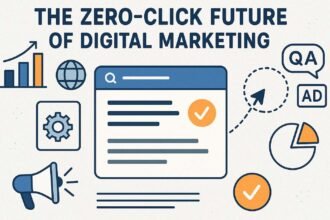


You know that feeling when you’re scrolling through Instagram at 2 AM, and suddenly you see an ad for those exact sneakers you were googling earlier? Yeah, that’s not magic—that’s Meta Ads doing its thing. And honestly? It’s both impressive and slightly creepy.
Let me break down how this multi-billion dollar advertising machine actually works, because whether you’re trying to grow your side hustle or you’re just curious why you keep seeing ads for cat furniture (no judgment), understanding Meta Ads is pretty essential in 2024.
What Actually Are Meta Ads?
First things first: Meta Ads is the advertising platform that powers ads across Facebook, Instagram, Messenger, and WhatsApp. When Facebook rebranded to Meta in 2021, they consolidated all their advertising tools under one roof. Think of it as the control center where businesses decide who sees their ads, when they see them, and what those ads look like.
Here’s the wild part: Meta’s advertising revenue hit over $131 billion in 2023. That’s not a typo. Businesses are pouring money into this platform because, when done right, it actually works.
The Auction System: It’s Not Just About Money
Here’s where most people get it wrong. They think Meta Ads works like a billboard—you pay, your ad shows up, done deal. Nope. It’s way more sophisticated (and honestly, more fair) than that.
Meta uses an auction system every single time there’s an opportunity to show someone an ad. But here’s the twist: the highest bidder doesn’t always win. Meta looks at three main factors:
1. Your Bid: How much you’re willing to pay to achieve your goal (whether that’s a click, a purchase, or a video view).
2. Estimated Action Rates: How likely Meta thinks people are to engage with your ad. If your ad is garbage and nobody clicks it, Meta won’t show it even if you’re paying premium prices.
3. Ad Quality and Relevance: Meta scores your ad based on feedback from users. If people keep hiding your ad or reporting it as spam, your relevance score tanks.
The formula Meta uses is called “Total Value.” They multiply your bid by the estimated action rate and ad quality. The ad with the highest total value wins the auction and gets shown.
Real-world example: Let’s say you’re selling handmade jewelry. You bid $2 per click. Your competitor bids $3 per click. Sounds like they’d win, right? But if your ad has gorgeous photos, compelling copy, and people actually engage with it, while theirs looks like it was made in Microsoft Paint in 2003, you might still win because your total value is higher.
The Targeting Machine: How Meta Knows Everything
Okay, this is where things get interesting—and where Meta really shows its power. The platform collects an insane amount of data about users, and they use it to help advertisers reach exactly the right people.
Core Audiences (The Basics)
You can target people based on:
- Demographics: Age, gender, education, job title, relationship status
- Location: Down to a 1-mile radius around a specific address
- Interests: Based on pages they follow, posts they engage with, apps they use
- Behaviors: Online shopping habits, device usage, travel patterns
Custom Audiences (Your Existing People)
This is where it gets powerful. You can upload your customer email list, and Meta will match it to user accounts. Suddenly, you can show ads specifically to people who’ve already bought from you, visited your website, or engaged with your Instagram profile.
I worked with a small coffee roastery that used Custom Audiences to target people who’d purchased from them in the past six months with ads for their new seasonal blend. They saw a 340% return on ad spend just by reaching people who already knew and trusted them.
Lookalike Audiences (Find Your Twins)
Here’s where Meta’s AI really flexes. You give them a list of your best customers, and their algorithm finds people who have similar characteristics, behaviors, and interests. It’s like telling Meta “find me more people like these folks” and watching them deliver.
A local gym I know used Lookalike Audiences based on their most active members. They expanded their reach to people with similar fitness interests, workout habits, and lifestyle patterns. Result? Their membership inquiries increased by 200% in three months.
The Ad Delivery Process: What Happens in Milliseconds
When someone opens Facebook or Instagram, here’s what happens in literal milliseconds:
Step 1: Meta identifies that there’s an opportunity to show an ad to this specific user.
Step 2: The system runs through all active ad campaigns that could target this person based on their demographics, interests, and behaviors.
Step 3: An instant auction happens. Meta calculates the Total Value for each competing ad.
Step 4: The winning ad gets displayed in the user’s feed, Stories, Reels, or wherever the ad placement was set.
Step 5: If the user takes action (clicks, watches, purchases), Meta records it and optimizes future delivery based on what worked.
This happens billions of times per day across Meta’s platforms. The machine learning algorithms are constantly learning which ads perform best for which users, making the system smarter with every impression.
Campaign Structure: The Three-Level System
Meta Ads operates on a three-tier hierarchy, and understanding this is crucial:
Campaign Level
This is where you set your objective. What do you actually want to achieve? Meta offers objectives like:
- Awareness (get your brand in front of people)
- Traffic (drive people to your website)
- Engagement (get likes, comments, shares)
- Leads (collect contact information)
- Sales (drive actual purchases)
Your objective tells Meta’s algorithm what to optimize for. Choose wrong, and you’ll waste money fast.
Ad Set Level
This is your targeting and budget home. You decide:
- Who sees your ads (audience targeting)
- Where ads appear (Facebook Feed, Instagram Stories, Reels, etc.)
- How much you’ll spend (daily or lifetime budget)
- When ads run (schedule and duration)
Ad Level
This is the creative stuff—your actual images, videos, copy, and call-to-action buttons. You can test multiple ad variations within a single ad set to see what resonates.
Pro insight: Most beginners mess up by creating one campaign with one ad set and one ad. Smart advertisers create multiple ad sets testing different audiences, and multiple ads testing different creative approaches. It’s the only way to find what actually works.
The Pixel: Your Secret Tracking Weapon
The Meta Pixel is a small piece of code you install on your website that tracks what people do after clicking your ad. Did they just bounce? Add something to cart? Actually purchase?
This data is gold. The Pixel allows Meta’s algorithm to:
- Track conversions and attribute sales to specific ads
- Build Custom Audiences of website visitors
- Optimize ad delivery to people more likely to convert
- Provide detailed analytics on user behavior
Real scenario: An online clothing brand installed the Pixel and discovered that people who watched their product videos for more than 15 seconds were 5x more likely to purchase. They created a Custom Audience of video viewers and retargeted them with purchase-focused ads. Their conversion rate jumped from 1.2% to 4.7%.
Important note: With iOS 14.5+ and increasing privacy regulations, Pixel tracking isn’t as powerful as it used to be. Many users opt out of tracking, which means your data is incomplete. This is the reality of modern digital advertising—you’re working with partial information, not the full picture.
Ad Formats: Pick Your Weapon
Meta offers a ton of different ad formats, and choosing the right one matters:
Image Ads: Simple, straightforward, work great for direct response. A coffee shop advertising their new seasonal latte? Image ad.
Video Ads: Higher engagement, better for storytelling. A fitness coach showing workout transformations? Video ad all the way.
Carousel Ads: Multiple images or videos people can swipe through. Perfect for e-commerce showing different products or features.
Collection Ads: Mobile-only format that opens into a full-screen experience. Great for brands wanting an immersive showcase.
Stories and Reels Ads: Full-screen, vertical, designed to feel native to the platform. These are crushing it right now for younger audiences.
The format should match your goal and audience. Trying to reach Gen Z? Stories and Reels. Targeting business professionals? Maybe stick with standard feed placements.
The Algorithm: Your Invisible Partner
Meta’s machine learning algorithm is constantly working in the background, and understanding how it operates helps you work with it, not against it.
The Learning Phase: When you launch a new campaign, Meta enters a “learning phase” where it’s testing and gathering data. During this phase (usually 50 conversions or 7 days), performance can be unstable. Resist the urge to make constant changes—you’ll just reset the learning process.
Optimization: Once the algorithm has enough data, it starts optimizing delivery toward people most likely to complete your desired action. If you’re running a conversion campaign, Meta will increasingly show your ads to people who have a history of actually purchasing, not just clicking.
Ad Fatigue: Show the same ad to the same people too many times, and performance drops. The algorithm tracks frequency (average times each person sees your ad), and when it gets too high, engagement plummets. This is why you need fresh creative regularly.
A digital marketing agency I know tested this extensively. They found that for their clients, ad performance dropped by 30-50% once frequency exceeded 3.5 times per person. Their solution? Rotate new creative every 7-10 days.
Budgeting: How Much Should You Actually Spend?
Here’s the honest truth: there’s no magic number. But there are smart ways to approach it.
Start Small: If you’re testing Meta Ads for the first time, start with $10-20 per day. Yes, really. This gives you data without blowing your budget while the algorithm learns.
Scale Gradually: Once you find winning ads, scale your budget by 20-30% every few days, not 200% overnight. Aggressive scaling confuses the algorithm and tanks performance.
Lifetime Budget vs. Daily Budget: Daily budgets are safer for beginners—you won’t accidentally overspend. Lifetime budgets give Meta more flexibility to optimize delivery across different times and days.
Reality check: I’ve seen businesses spend $50 per day and get amazing results, and others spend $500 per day and waste every penny. Budget matters less than strategy, targeting, and creative quality.
Metrics That Actually Matter
Meta throws dozens of metrics at you, but most are vanity numbers. Here’s what actually matters:
Cost Per Result: What are you paying to achieve your campaign objective? If your goal is purchases, what’s your cost per purchase? This is your north star.
ROAS (Return on Ad Spend): For every dollar spent, how much revenue did you generate? A ROAS of 3 means you made $3 for every $1 spent. Most e-commerce businesses aim for 3-4x minimum.
Click-Through Rate (CTR): What percentage of people who see your ad actually click it? Industry average is 0.9-1.5%. Below that? Your creative needs work.
Conversion Rate: Of the people who click, how many complete your desired action? This tells you if your landing page and offer are working.
Frequency: How many times, on average, each person sees your ad. Above 3-4 and you’re likely experiencing ad fatigue.
Ignore metrics like reach and impressions unless you’re running brand awareness campaigns. They don’t pay the bills.
Common Mistakes (And How to Avoid Them)
After seeing hundreds of Meta Ad campaigns, here are the mistakes that kill results:
Mistake #1: Targeting Too Broad or Too Narrow Targeting “everyone aged 18-65 interested in food” across the entire US? Too broad. Targeting “women aged 32-34 in Brooklyn who like vegan cooking and CrossFit”? Probably too narrow. Find the middle ground.
Mistake #2: Ignoring the Creative Your targeting and budget could be perfect, but if your ad looks like spam or doesn’t stop the scroll, you’ll fail. Invest in good creative—it’s the most important part.
Mistake #3: Not Testing Running one ad with one image and one headline? You’re guessing, not marketing. Test different images, videos, copy, and calls-to-action. Let data tell you what works.
Mistake #4: Giving Up Too Soon Meta Ads isn’t a lottery ticket. It takes testing, learning, and optimization. Most successful campaigns don’t work in week one—they work after iteration.
Mistake #5: Ignoring Mobile Over 90% of Meta’s ad revenue comes from mobile. If your ad or landing page isn’t mobile-optimized, you’re losing money.
The Pros and Cons: Let’s Be Real
What Makes Meta Ads Powerful:
- Unmatched targeting precision—you can reach exactly who you want
- Massive audience—over 3 billion people across Meta’s platforms
- Flexible budgets—start with $5 or spend $5 million
- Detailed analytics—you know exactly what’s working
- Fast results—you can launch and see data within hours
What’s Challenging:
- Increasing costs—CPM (cost per thousand impressions) has risen significantly
- Privacy changes—iOS updates and tracking limitations reduce data accuracy
- Complexity—the platform has a learning curve that intimidates beginners
- Competition—you’re competing in auctions against businesses with bigger budgets
- Ad fatigue—you need fresh creative constantly to maintain performance
Real Talk: Is It Worth It?
For most businesses? Absolutely yes—if you approach it strategically. Meta Ads remains one of the most cost-effective ways to reach targeted audiences at scale. But it’s not a “set and forget” platform anymore.
You need to commit to learning, testing, and optimizing. You’ll waste some money initially—everyone does. But once you crack the code for your specific business, the results can be transformative.
A friend launched a sustainable fashion brand with a $500 Meta Ads budget. By month three, she was spending $3,000 per month and generating $15,000 in sales. By month six, she quit her day job. That’s not typical, but it’s possible with the right strategy.
The Bottom Line
Meta Ads works through a sophisticated auction system powered by machine learning, using extensive user data to connect businesses with their ideal customers across Facebook, Instagram, and beyond. Success requires understanding the three-level campaign structure, creating compelling creative, targeting strategically, and continuously optimizing based on performance data.
It’s not magic, and it’s not guaranteed. It’s a tool—powerful in the right hands, expensive in the wrong ones. Start small, test constantly, focus on metrics that matter, and scale what works.
And hey, next time you see a sponsored post at 2 AM for those sneakers you were googling? At least now you know how it got there.