

You’ve been running ads for a while now. Maybe you’ve burned through a few thousand dollars testing Facebook campaigns, or perhaps you’ve dabbled in Google Ads with mixed results. But here’s what separates the people spending money on ads from those actually making money with them: advanced paid advertising strategies that most marketers won’t tell you about.
This isn’t another beginner’s guide telling you to “target your audience” or “write compelling copy.” We’re going way beyond that. If you’re ready to transform your paid advertising from a necessary expense into a profit-generating machine, you’re in the right place.
Understanding the Advanced Paid Advertising Landscape
The paid advertising game has changed dramatically. What worked three years ago barely moves the needle today. Platform algorithms have become incredibly sophisticated, user behavior has shifted, and privacy updates have forced advertisers to completely rethink their approach.
Advanced paid advertising isn’t about running a single campaign and hoping for the best. It’s about building interconnected systems that work together across multiple platforms, optimizing for metrics that actually matter, and using data in ways that give you an unfair advantage over competitors.
The brands crushing it right now aren’t necessarily spending more—they’re spending smarter. They understand attribution modeling, they’ve mastered creative testing frameworks, and they know exactly which psychological triggers move their specific audience from browser to buyer.
Multi-Platform Attribution: Following the Real Customer Journey
Remember when you could just look at last-click attribution and call it a day? Those simple times are gone. Modern customers interact with your brand across an average of six to eight touchpoints before purchasing. Someone might see your TikTok ad, search for your brand on Google three days later, click a retargeting ad on Instagram, and finally convert through a Facebook ad two weeks after that.
Advanced advertisers use multi-touch attribution models to understand this journey. Instead of giving all the credit to the last ad someone clicked, you’re analyzing how each touchpoint contributed to the conversion. This completely changes how you allocate budget.
First-touch attribution helps you understand which channels are best at generating awareness. Linear attribution spreads credit equally across all touchpoints, giving you a balanced view. Time-decay attribution gives more weight to touchpoints closer to conversion, which makes sense for longer sales cycles.
But the real power comes from building custom attribution models based on your specific business. Maybe you’ve noticed that people who engage with your educational content on YouTube convert at three times the rate of cold traffic. That insight should fundamentally change how you structure campaigns across platforms.
Tools like Google Analytics 4, triple whale, and Northbeam have made sophisticated attribution accessible to businesses of all sizes. The key is actually using these insights to inform budget allocation rather than just generating reports that sit in a folder somewhere.
Advanced Audience Segmentation and Targeting
Targeting “men aged 25-40 interested in fitness” isn’t going to cut it anymore. Advanced paid advertising requires surgical precision in how you segment and target audiences.
Start with your first-party data. The people who have already interacted with your brand are gold. But instead of lumping them into one retargeting audience, segment them based on behavior. Someone who visited your pricing page five times is in a completely different mindset than someone who read one blog post.
Create audiences based on engagement depth. People who watched 75% of your video content should see different ads than those who watched 10%. Email subscribers who haven’t purchased yet need a different approach than past customers. Website visitors who added items to cart but didn’t complete checkout require specific messaging that addresses their objections.
Lookalike audiences become exponentially more powerful when you feed them high-quality seed audiences. Instead of creating a lookalike of all your customers, create one based on your highest lifetime value customers. The algorithm will find people who share characteristics with your best buyers, not just anyone who’s ever made a purchase.
Platform-specific targeting features offer unique opportunities. LinkedIn’s job title and company size targeting is unmatched for B2B. Pinterest’s interest targeting captures people in planning mode with high purchase intent. TikTok’s interest categories and behavior targeting taps into cultural moments and trends.
The most sophisticated advertisers layer multiple targeting criteria to create hyper-specific audience segments. You’re not just targeting business owners—you’re targeting business owners in specific industries, at companies of specific sizes, who have engaged with content about specific pain points your product solves.
Creative Testing Frameworks That Actually Work
Most advertisers approach creative testing completely wrong. They create five different ads, run them simultaneously, and wonder why none perform well. Advanced creative testing requires structure and discipline.
The concept of creative testing frameworks means you’re not randomly trying different things. You’re systematically testing specific variables to understand what drives performance. Test one element at a time so you actually know what moved the needle.
Start with your hook—the first three seconds that determine whether someone keeps watching or scrolls past. Create multiple versions testing different approaches: asking a question, making a bold statement, showing a transformation, highlighting a problem. Keep everything else identical so you know the hook is what drives performance differences.
Once you’ve identified winning hooks, test different body content while keeping the winning hook constant. Try different storytelling approaches: customer testimonials, founder stories, product demonstrations, before-and-after comparisons, educational content that positions your product as the solution.
Your call-to-action deserves its own testing phase. “Shop Now” versus “Learn More” versus “Get Started” can produce dramatically different results depending on your offer and audience temperature. The color, size, and placement of CTA buttons matter more than most people realize.
Don’t neglect static images in your obsession with video content. Well-designed static ads with compelling copy often outperform flashy videos, especially on platforms like Facebook where users are in browsing mode rather than entertainment mode.
The timeline for creative testing matters too. You need enough data to make informed decisions, but you can’t let underperforming ads drain your budget. Generally, if an ad hasn’t shown promise after spending one to two times your target cost per acquisition, it’s time to turn it off and test something new.
Bidding Strategies for Maximum Efficiency
Bidding strategy is where amateur advertisers leave serious money on the table. The difference between manual bidding, automated bidding, and the various automated options can literally be the difference between profit and loss.
Manual bidding gives you complete control but requires constant monitoring and adjustment. You’re telling the platform exactly how much you’re willing to pay for each click, impression, or conversion. This works well when you have strong data on what a customer is worth and want tight control over costs.
Target CPA bidding tells the platform what you want to pay per conversion and lets the algorithm optimize to hit that target. This works beautifully when you have conversion tracking properly set up and enough historical data for the algorithm to learn from. The platform will automatically adjust bids to get you conversions at your target cost.
Target ROAS bidding is the next level. Instead of just targeting a cost per acquisition, you’re telling the platform what return on ad spend you need. This requires accurate conversion value tracking but allows the platform to pursue higher-value conversions even if they cost more.
Maximize conversions and maximize conversion value bidding hand complete control to the algorithm with the goal of getting you the most results within your budget. These strategies work incredibly well for established campaigns with robust tracking, but they can burn through budget quickly if your tracking isn’t dialed in.
The real advanced move is understanding when to use each strategy. New campaigns often perform better with manual or target CPA bidding while you gather data. Once you have 30-50 conversions, switching to target ROAS or maximize conversion value often unlocks significantly better performance.
Platform-specific bidding features offer additional optimization opportunities. Facebook’s bid caps let you control maximum bids while still using automation. Google’s portfolio bid strategies let you optimize across multiple campaigns simultaneously. Understanding these nuances gives you a major edge.
Advanced Campaign Structures and Funnel Architecture
Campaign structure is the invisible framework that determines whether your advertising scales profitably or falls apart as you increase spend. The right structure depends on your business model, but certain principles apply universally.
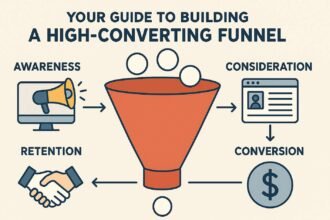
Full-funnel campaigns recognize that different people need different messages depending on where they are in their journey. Top-of-funnel campaigns focus on awareness and reach, introducing your brand to cold audiences with educational or entertaining content. Middle-funnel campaigns engage people who’ve shown interest but aren’t ready to buy yet. Bottom-funnel campaigns push for conversions with direct offers to warm audiences.
Each funnel stage requires different creative, different targeting, different optimization goals, and different budget allocation. Top-of-funnel campaigns might optimize for video views or engagement. Middle-funnel for landing page views or add-to-carts. Bottom-funnel for purchases or leads.
The connection between funnel stages matters tremendously. Your middle-funnel campaigns should retarget people who engaged with top-funnel content. Bottom-funnel should hit people who engaged with middle-funnel offers. This creates a system where each campaign feeds the next, compounding effectiveness.
Campaign budget optimization has become more sophisticated. Rather than setting budgets at the ad set level, CBO lets the platform distribute budget across ad sets based on performance. This generally performs better, but it requires careful setup to prevent the algorithm from dumping all budget into the easiest conversions rather than the most valuable ones.
For e-commerce businesses, product-specific campaign structures often outperform generic campaigns. Create separate campaigns for bestsellers, high-margin products, and seasonal items. This allows you to tailor messaging and budget allocation based on product performance and business priorities.
Data Analytics and Performance Optimization
Advanced paid advertising lives and dies on data analysis. Not surface-level metrics like clicks and impressions, but deep analysis that reveals what’s actually driving business results.
Understanding your unit economics is fundamental. You need to know not just what it costs to acquire a customer, but what that customer is worth over time. Lifetime value analysis changes everything about how you approach paid advertising. If you know a customer is worth five hundred dollars over twelve months, you can profitably spend one hundred fifty dollars to acquire them even though your first-purchase average order value is only eighty dollars.
Cohort analysis shows you how customer behavior changes over time. Maybe customers acquired through Facebook ads have a 40% repurchase rate compared to 25% for Google ads customers. That insight should influence budget allocation even if initial CPA is higher on Facebook.
Breakeven calculations help you set appropriate targets. If your gross margin is 60% and you need to reserve 20% for operating expenses, you can spend up to 40% of revenue on customer acquisition and still be profitable. This gives you clear guardrails for acceptable CPA and ROAS.
The relationship between ad spend and return is rarely linear. Most businesses have a sweet spot where they’re acquiring customers efficiently. Spend too little and you’re leaving opportunity on the table. Spend too much and efficiency tanks as you reach audience saturation. Regular analysis helps you find and maintain that optimal spend level.
Advanced analytics platforms like Google Analytics 4, Mixpanel, or Amplitude let you track the entire customer journey from first ad click through multiple purchases. Setting up proper event tracking and custom conversions takes effort upfront but pays dividends in optimization capability.
Scaling Campaigns Without Killing Performance
Scaling is where most advertisers hit a wall. Campaigns that perform beautifully at two thousand dollars per month completely fall apart at ten thousand. Understanding how to scale while maintaining efficiency separates good advertisers from great ones.
Vertical scaling means increasing budget on existing campaigns. This seems straightforward but requires finesse. Increasing budget too quickly shocks the algorithm and forces it to relearn, often tanking performance temporarily. A good rule of thumb is increasing budgets by no more than 20-30% every three to four days.
Horizontal scaling means expanding into new audiences, platforms, or campaign types while maintaining what’s working. Instead of just spending more on your winning Facebook campaign, you create similar campaigns targeting new audience segments or expand into Instagram or YouTube.
Creative scaling is often overlooked but incredibly powerful. Rather than just spending more money showing the same ads to more people, you create more variations of what’s working. If one video style is crushing it, produce ten more videos in that same style. Fresh creative prevents ad fatigue and expands your effective reach.
Geographic scaling opens new markets systematically. Start with your best-performing location, prove the model works, then expand to similar markets one at a time. This controlled approach prevents budget waste and allows you to adapt messaging for different markets.
Time-based scaling adjusts spend based on performance patterns. If your ads perform 40% better on weekends, shift budget accordingly. If certain hours drive higher-value customers, increase bids during those windows. This optimization compounds over time.
The Psychology Behind High-Converting Ads
Understanding marketing psychology transforms your advertising from guesswork into science. The most effective ads tap into specific psychological principles that drive human decision-making.
Loss aversion is powerful—people are more motivated to avoid losing something than to gain something of equal value. Framing your offer as preventing a loss often outperforms framing it as a gain. “Don’t miss out on” typically beats “Get access to.”
Social proof leverages our tendency to follow the crowd. Showing real customer results, testimonials, or usage numbers builds trust faster than any claim you could make about your own product. Specific numbers work better than vague statements—”Over 50,000 customers” beats “Thousands of customers.”
Scarcity creates urgency by triggering fear of missing out. Limited quantities, time-bound offers, or exclusive access get people to take action now rather than later. The key is making scarcity real and believable, not manufactured and manipulative.
The contrast principle affects how people perceive value. Showing a premium option next to your target offer makes the target look more reasonable. Presenting your price after establishing the problem’s cost makes your solution seem like a bargain.
Reciprocity drives people to return favors. Giving valuable content for free before asking for a purchase builds goodwill and trust. Free samples, valuable guides, or helpful tools create a sense of obligation that increases conversion rates.
Authority positioning establishes credibility. Credentials, certifications, media mentions, or expert endorsements signal that you’re trustworthy and competent. People defer to perceived experts, especially in unfamiliar domains.
Privacy Changes and Future-Proofing Your Strategy
iOS 14.5 and other privacy updates have fundamentally changed paid advertising. Advertisers who adapted quickly maintained performance while others watched results crater. Understanding how to navigate this new landscape is critical for long-term success.
First-party data has become invaluable. Building your own email list, SMS subscribers, and customer database gives you targeting capabilities that don’t depend on third-party cookies or device identifiers. Every piece of customer data you collect directly is an asset that increases in value as privacy restrictions tighten.
Server-side tracking and conversion APIs help recover data lost to privacy restrictions. By sending conversion data directly from your server to advertising platforms, you bypass browser-level blocking and get more accurate attribution. Implementation requires technical setup but dramatically improves data quality.
Broad targeting has made a comeback. With detailed targeting options restricted, many advertisers find that giving platforms more flexibility actually improves performance. The algorithms have become sophisticated enough to find your ideal customers without granular targeting inputs.
Creative quality matters more than ever. When you can’t rely on hyper-specific targeting, your creative has to work harder to attract the right people and repel the wrong ones. Self-selecting creative that clearly communicates who your product is for improves efficiency even with broader targeting.
Platform diversification protects against changes to any single channel. Building presence across multiple platforms means algorithm updates or policy changes on one platform don’t destroy your entire acquisition strategy. Having campaigns running profitably on Google, Facebook, TikTok, and LinkedIn provides resilience.
Building Systems That Run Without You
The ultimate goal of advanced paid advertising isn’t just profitable campaigns—it’s building systems that generate predictable results without requiring your constant attention. This level of systematization separates businesses that scale from those that plateau.
Standard operating procedures document every process in your advertising operation. How you set up campaigns, test creative, analyze data, and make optimization decisions should be written down in reproducible steps. This allows you to delegate, scale, and maintain consistency.
Automated rules and scripts handle routine optimizations. Platforms like Google Ads allow you to create automated rules that pause underperforming ads, increase budgets on winners, or adjust bids based on performance. Learning basic scripts takes your automation even further.
Regular reporting cadences keep you informed without constant monitoring. Weekly performance reviews, monthly deep dives, and quarterly strategic assessments provide structure. Dashboards that surface key metrics at a glance let you spot issues quickly without drowning in data.
Team structure and roles become important as you scale. Someone should own creative production, another person data analysis, someone else campaign management. Clear ownership prevents things from falling through cracks and allows people to develop deep expertise.
Testing calendars ensure you’re always learning. Schedule creative tests, audience tests, and landing page tests in advance rather than randomly trying things when you remember. Consistent testing compounds over time, continuously improving performance.
The path to advanced paid advertising mastery isn’t quick or easy, but it’s absolutely achievable for anyone willing to put in the work. Start with one concept from this guide, implement it systematically, measure the results, and build from there. The businesses winning with paid advertising aren’t necessarily smarter—they’re just more disciplined about applying proven strategies and continuously optimizing based on data.
Your advertising doesn’t have to be a black box where you throw money in and hope customers come out. With these advanced strategies, you can build a predictable, scalable, profitable advertising system that grows your business month after month.