
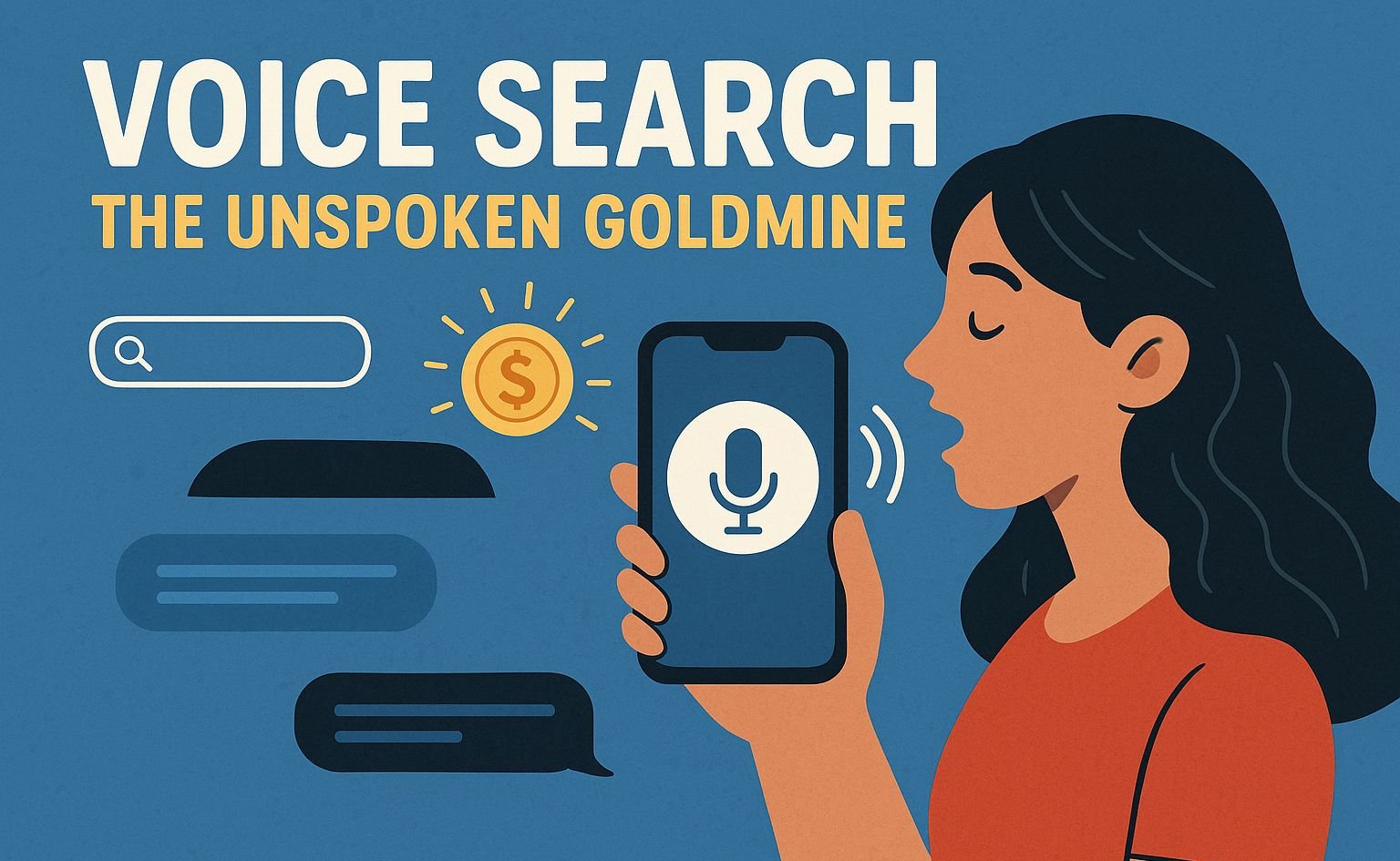
Look, I’m just gonna say it: if you’re still optimizing your content like it’s 2015, you’re basically shouting into the void. And in today’s world where everyone’s talking to Siri like she’s their bestie and asking Alexa for life advice at 2 AM, that’s a problem you can’t afford to ignore.
Here’s the tea: voice search optimization isn’t just some fancy buzzword your marketing intern keeps bringing up. It’s literally reshaping how people find stuff online, and if you’re not on board yet, you’re missing out on a massive chunk of potential customers who’ve already ditched typing for talking.
Why Voice Search SEO Is Actually a Big Deal
Let me paint you a picture. You’re rushing to a meeting, hands full of coffee and chaos, and you need to find the nearest print shop ASAP. Are you gonna put down everything and carefully type out a search query? Hell no. You’re gonna yell “Hey Google, where’s the closest print shop near me?” into your phone like it owes you money.
That’s exactly why voice search rankings matter. According to recent industry data, over 50% of all searches will be voice-based by 2025. That’s not “might be” or “could potentially happen”—we’re talking about a fundamental shift in how humans interact with the internet.
And here’s where it gets interesting for you entrepreneurs and digital hustlers: voice search queries have higher purchase intent. When someone asks their smart speaker “What’s the best project management tool for startups?”, they’re not just browsing—they’re ready to pull the trigger on a decision.
How Voice Search Actually Works
Before we dive into the tactics, let’s get real about what’s happening under the hood. When you ask your device a question, it’s not just matching keywords anymore. These AI assistants have gotten scary good at understanding context, intent, and natural language patterns.
Voice search SEO relies on three core components:
Natural Language Processing (NLP): Your device understands that “best pizza spot downtown” and “where can I get good pizza in the city center” are basically asking the same thing, even though they’re worded differently.
Semantic Search: Search engines now grasp the meaning behind queries, not just the words. They understand relationships between concepts and can serve up results that match what you’re actually looking for, not just what you literally said.
Local Intent Recognition: Most voice searches have local intent. When someone’s asking their phone for recommendations, they usually want something nearby, like, right now.
The Big Differences Between Voice and Text Search
Here’s where traditional SEO tactics start falling apart. Voice searches are fundamentally different beasts, and you need to treat them that way.
Conversational vs. Keyword-Stuffed: Nobody talks like a caveman robot. Text search: “best coffee shop NYC lower east side cheap.” Voice search: “Hey Siri, where can I find a good, affordable coffee shop in the Lower East Side?” See the difference?
Question-Based Queries: Voice searches are overwhelmingly question-based. People lead with who, what, where, when, why, and how. If your content isn’t answering specific questions, you’re invisible to voice search.
Longer Query Length: Voice searches average 29 words, while text searches hover around 3-4 words. This changes everything about how you structure content and target keywords.
Position Zero or Bust: With voice search, there’s basically only one winner—the featured snippet that gets read aloud. Coming in second place? That’s like being the first loser. Harsh, but true.
Voice Search Optimization Strategies That Actually Work
Alright, enough theory. Let’s get into the actionable stuff that’ll actually move the needle for your business.
Strategy #1: Write Like a Human, Not a Robot
This should be obvious by now, but I still see businesses pumping out content that reads like it was written by an algorithm having an existential crisis. Your content needs to sound natural when read aloud.
Test this yourself: read your content out loud. If you sound like a corporate press release from 1997, rewrite it. Use contractions, embrace conversational language, and don’t be afraid to show personality. The brands winning at voice search optimization are the ones that sound like actual humans you’d want to talk to.
Strategy #2: Target Question Keywords Like Your Life Depends On It
Create content that directly answers questions your audience is actually asking. Use tools like AnswerThePublic, Google’s “People Also Ask” section, or even just scroll through Reddit and Quora to see what real people in your industry want to know.
Structure your content with clear question-and-answer formats. Start sections with the actual question as a heading, then provide a concise, direct answer in the first paragraph. This makes it stupid easy for search engines to extract your content as a voice search result.
For example, instead of a vague heading like “Benefits of Our Product,” go with “What makes this product better than competitors?” Then immediately answer it clearly and specifically.
Strategy #3: Optimize for Local Voice Search
This is HUGE for businesses with physical locations or local service areas. When someone asks “Where’s the best burger near me?”, Google’s pulling from local search results, Google My Business listings, and reviews.
Make sure your Google My Business profile is immaculate. I’m talking accurate hours, updated photos, responding to reviews (yes, even the salty ones), and detailed business descriptions. Include location-based keywords naturally in your content without sounding like a spam bot.
Create location-specific content pages if you serve multiple areas. A Miami-based real estate agent shouldn’t just have generic content—they need pages specifically answering “What’s the housing market like in Coral Gables?” or “Are Brickell condos a good investment?”
Strategy #4: Nail Your Technical SEO Foundation
Voice search might feel like magic, but it still runs on the technical infrastructure of your website. If your site is a slow, clunky mess, voice assistants are gonna skip right past you.
Page speed is non-negotiable. Voice search devices prioritize fast-loading pages because nobody wants to wait around for answers. Aim for load times under 3 seconds. Compress images, leverage browser caching, and minimize JavaScript bloat.
Mobile optimization is mandatory. Most voice searches happen on mobile devices. If your site looks janky on mobile or requires pinch-zooming to read, you’re toast. Responsive design isn’t optional anymore—it’s the bare minimum.
Structured data markup helps search engines understand your content better. Implement Schema markup for things like FAQs, how-to guides, local businesses, products, and reviews. It’s like giving search engines a cheat sheet for understanding your content.
Strategy #5: Create FAQ Pages That Actually Help
FAQ pages are criminally underutilized goldmines for voice search SEO. These pages naturally align with how people ask questions vocally and provide direct, concise answers—exactly what voice assistants are looking for.
But here’s the catch: your FAQ needs to answer real questions people actually ask, not the questions your legal department wishes they’d ask. Do keyword research specifically for question-based queries in your niche.
Format each Q&A clearly. Use the question as the heading (H2 or H3), then provide a concise answer immediately below. Aim for 40-60 words for the initial answer—just enough to satisfy a voice search without overwhelming someone listening on the go.
Strategy #6: Build Domain Authority Through Content and Links
Here’s an uncomfortable truth: voice search rankings favor authoritative domains. Google’s more likely to surface answers from sites it trusts. If you’re a brand new site with minimal content and no backlinks, you’re fighting an uphill battle.
Create genuinely valuable, comprehensive content that other sites want to link to. Not fluff pieces or keyword-stuffed garbage—real, useful resources that solve problems and provide unique insights.
Guest posting, digital PR, partnerships, and creating linkable assets (original research, free tools, comprehensive guides) all contribute to building the authority signals that boost your voice search visibility.
Strategy #7: Optimize for Featured Snippets
Since voice assistants typically read from featured snippets (position zero), getting your content selected for these is basically winning the voice search lottery.
Structure content to directly answer specific questions in 40-60 words. Use bullet points, numbered lists, and tables where appropriate—Google loves pulling these formats for snippets.
Create dedicated “definition” sections for important terms. When someone asks “What is voice search optimization?”, a clear, concise definition paragraph on your page increases the chances of being selected.
Monitor which queries already trigger featured snippets in your niche, then create superior content targeting those same questions.
Strategy #8: Don’t Sleep on Long-Tail Keywords
While everyone’s fighting over “pizza NYC,” smart operators are targeting “where can I find authentic Neapolitan pizza with vegan options in Brooklyn?” Yeah, it’s longer and gets fewer searches, but the intent is crystal clear and the competition is minimal.
Voice search optimization thrives on long-tail, conversational keywords. These queries might have lower search volume individually, but collectively they represent massive opportunity with higher conversion rates.
Use natural language throughout your content. Instead of forcing “best running shoes” fifty times, incorporate variations like “which running shoes should I buy,” “what makes good running shoes,” and “how do I choose running shoes for marathon training.”
Measuring Your Voice Search Success
You can’t optimize what you don’t measure, but tracking voice search SEO performance gets tricky since Google Analytics doesn’t explicitly tag queries as “voice” versus “text.”
Here’s what you can track:
Featured snippet wins: Monitor how many featured snippets you’re ranking for. Tools like SEMrush, Ahrefs, and Moz can track this. More snippets generally mean more voice search visibility.
Long-tail keyword traffic: Increased traffic from longer, question-based keywords often indicates voice search success. Look for queries with 5+ words in your search console data.
Local search performance: Track rankings for “near me” queries and local pack placements. Increased visibility here suggests stronger voice search positioning.
Mobile traffic patterns: Voice search predominantly happens on mobile. If you’re seeing traffic growth specifically from mobile devices, voice optimization might be contributing.
Bounce rate and time on page: Voice search users who find what they need quickly might bounce—but that’s actually a good thing. Low bounce rates with short time-on-page for informational queries suggests you’re efficiently answering questions.
Common Voice Search Mistakes That’ll Tank Your Rankings
Let’s talk about what not to do, because I see businesses making these mistakes constantly.
Ignoring conversational language: If your content sounds like it was written by a lawyer in 1952, voice search will ignore you. Period.
Forgetting mobile users: Optimizing for desktop while neglecting mobile is like opening a store but locking the front door. Most voice searches happen on mobile devices.
Keyword stuffing 2.0: Repeating “voice search SEO voice search optimization voice search rankings” unnaturally throughout your content doesn’t fool anyone. Write for humans first, algorithms second.
No local optimization: If you have a physical business location but haven’t claimed and optimized your Google My Business profile, you’re leaving money on the table.
Slow site speed: A beautiful site that takes 10 seconds to load is like a Ferrari with no engine. Page speed directly impacts voice search rankings.
Ignoring schema markup: Not implementing structured data is like speaking to search engines in a language they don’t understand well. Make their job easier with proper markup.
The Future of Voice Search (And Why You Should Care Now)
Voice search isn’t slowing down—it’s accelerating. Smart speakers, voice assistants in cars, voice-enabled appliances, and wearable devices are making voice interaction the default for an increasing number of daily tasks.
Younger generations, especially Gen Z, have grown up with voice assistants as a normal part of life. For them, talking to devices isn’t novel or weird—it’s just how you get stuff done. As this demographic gains purchasing power, voice search optimization becomes even more critical.
Visual search combined with voice is creating multimodal search experiences. Users might show their phone a product and ask “Where can I buy this near me?” Preparing for these hybrid search methods means staying ahead of the curve.
AI improvements continue making voice search more accurate and contextually aware. As natural language processing gets better, voice assistants will handle more complex, multi-part queries. Your content needs to be comprehensive enough to satisfy increasingly sophisticated requests.
Real Talk: Voice Search Optimization Is Worth The Effort
Look, I get it. You’ve got a million things on your plate, and adding another SEO strategy to your workflow sounds exhausting. But here’s the thing: your competitors are either already doing this or they’re about to. The question isn’t whether voice search matters—it’s whether you’re gonna be visible when people start searching, or invisible while opportunities pass you by.
Voice search optimization isn’t some far-off futuristic concern. It’s happening right now, reshaping how people discover businesses, products, and services online. The brands that adapt now will dominate their niches for years to come.
The good news? You don’t need to overhaul everything overnight. Start with one or two strategies from this guide. Maybe optimize your Google My Business listing this week. Next week, create an FAQ page. The following week, restructure some content to target question-based keywords.
Small, consistent improvements compound over time. Six months from now, you’ll be ranking for voice searches your competitors haven’t even thought about yet.
Your Voice Search Action Plan
If you’re ready to actually do something with this information (and not just nod along then forget about it), here’s your starting checklist:
This week: Audit your current content. Read it out loud. Does it sound natural? If not, rewrite the worst offenders in a conversational tone.
This month: Research question-based keywords in your niche. Create or optimize one comprehensive FAQ page answering real customer questions.
This quarter: Implement schema markup across your site. Focus on FAQ, How-To, and Local Business schemas first.
Ongoing: Monitor your featured snippet wins, local search performance, and long-tail keyword rankings. Double down on what’s working.
Remember, voice search SEO isn’t about gaming the system or finding shortcuts. It’s about creating genuinely helpful content that answers real questions in a natural, accessible way. Do that consistently, and the rankings will follow.
Now stop reading and go optimize something. Your future customers are already searching—make sure they can find you when they do.